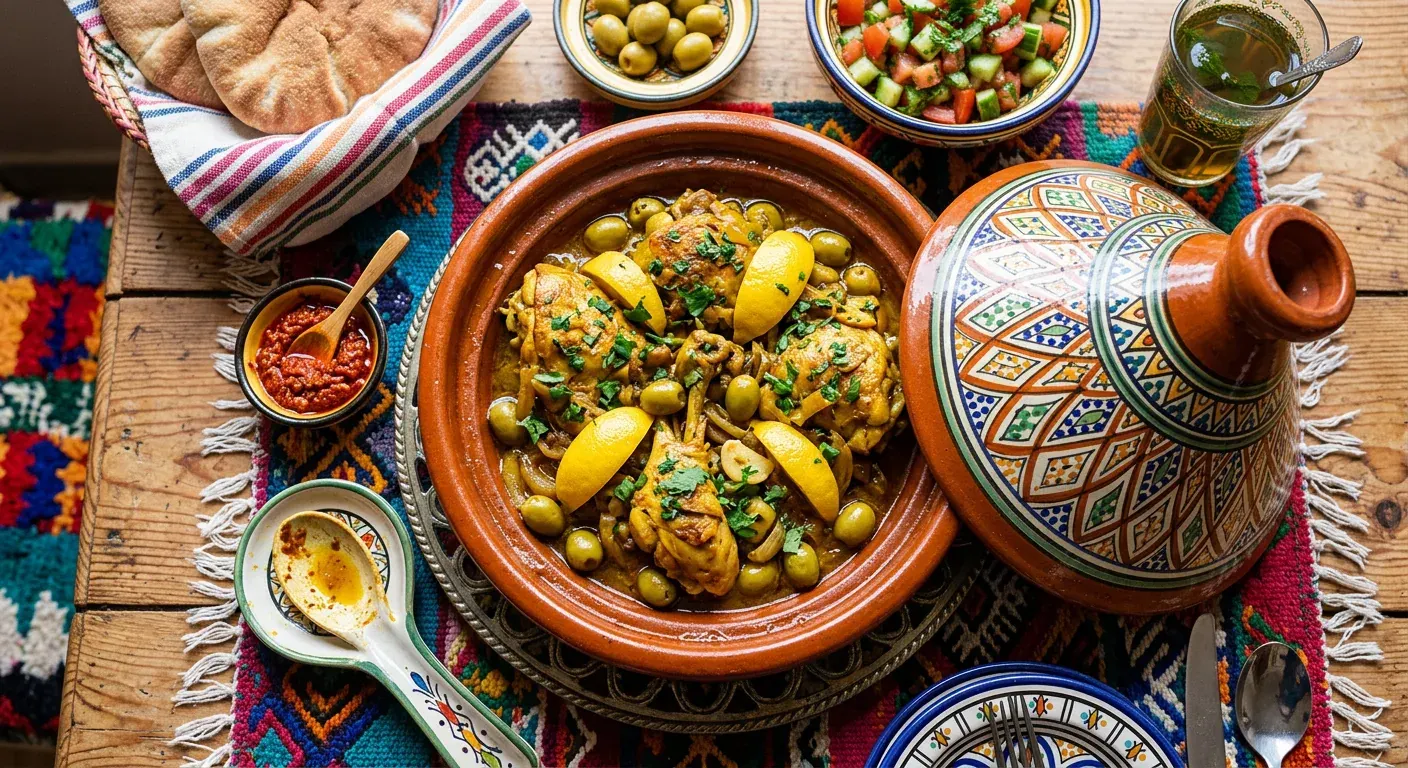
The first thing to understand about eating in Agadir is that it is not the food of the imperial cities. There are no pastilla-heavy palace menus here. This is the table of the Souss — the Amazigh (Berber) plain that runs from the Atlantic surf to the Anti-Atlas — and it has two things nowhere else in Morocco can claim: a fishing port among the country's busiest, and the argan tree, which grows in abundance only in this corner of the world. Eat your way through the dishes below and you have eaten Agadir properly, not generically.
Amlou — the Souss in a jar
Start where the locals start the day. Amlou is a thick, pourable spread of toasted almonds, culinary argan oil and honey, ground together until it loosens into something between a nut butter and a sauce — the reason people call it “Berber Nutella,” though it tastes nothing like it. It is a genuine Souss signature: made properly only where the argan grows. Eat it at breakfast, scooped onto warm bread or the pancakes below, with a glass of mint tea. Buy a jar from a women’s argan cooperative, where the oil is pressed and the amlou made on site, and you carry home the single most evocative souvenir Agadir offers.
Culinary argan oil
Most visitors only meet argan as a cosmetic. The culinary oil — pressed from lightly roasted kernels, deeper and more toasted than the cosmetic version — is the one that belongs on the table. A few drops finish a salad, a bowl of bread for dipping, or a tagine, lending a warm, hazelnut-like richness you will not taste anywhere outside the Souss. A cooperative tasting, where you compare cosmetic and culinary oils side by side and watch the kernels cracked by hand, is one of the most rewarding food stops on any Agadir itinerary.
Grilled sardines and the port catch
Agadir lands one of Morocco’s great sardine catches, and the most honest meal in the city is the port grill. You walk the stalls, choose your fish from the ice — sardines, sea bream, prawns, calamari — and it is cooked over coals with nothing but lemon and salt, for a fraction of resort prices. Grilled sardines, blistered and smoky, eaten with bread and a tomato salad, are the dish to try first. Go at lunch, when the catch is freshest, and pick a busy stall full of locals. The nearby fish market is the wholesale heart of the same catch and worth a look before you eat.
Fish tagine and Souss tagines
On the coast, the tagine turns to the sea: a fish tagine layered with chermoula (a marinade of coriander, garlic, cumin and paprika), tomatoes, peppers and preserved lemon is the local classic. Inland, the Souss kitchen leans Amazigh — chicken with preserved lemon and olives, lamb slow-cooked until it falls apart, and, distinctively, tagines finished with a thread of culinary argan oil, a regional touch you rarely meet elsewhere in the country. For something special, look for a tanjia-style slow dish, sealed and cooked for hours until the meat is meltingly soft.
Couscous and the Friday table
Couscous is the Friday dish across Morocco, and in a Souss home it is served the traditional way: semolina steamed again and again over a fragrant broth, mounded with seven vegetables and tender meat, sometimes crowned with sweet caramelised onions. It is communal, generous food — eaten slowly, scooped toward you with bread or a spoon. A home-style restaurant at lunch, or a Berber village table on a day trip, serves it far better than any resort buffet.
Bread, msemen and baghrir
Bread is the foundation of every Moroccan meal, and the morning streets of Agadir smell of it. Round khobz accompanies almost everything; at breakfast you want msemen, the flaky square pan-bread folded and griddled in layers, and baghrir, the spongy “thousand-hole” pancake that drinks up honey and amlou. Together with argan oil and a glass of tea, they are the Souss breakfast in full.
The Souss-Massa larder: citrus, bananas, juice
The plain behind Agadir is one of Morocco’s richest growing regions, and it shows on the table. The Souss-Massa supplies the country with citrus and bananas, so fresh orange juice is everywhere, squeezed to order and impossibly cheap, often blended into the local avocado-almond-date shake that drinks like a dessert. Add olives and oil pressed nearby, dates, almonds and the season’s vegetables, and you have the larder that feeds everything above.
Mint tea and the relaxed resort table
Every meal closes — and many begin — with mint tea, poured from a height into small glasses and offered as a gesture of welcome; accepting a glass is a small social act that carries real warmth. Agadir’s pleasure is that it lets you eat both ways: a relaxed resort or marina dinner with sea views one evening, and an unhurried, authentic meal at a port grill or in a Souss home the next. The best trips do both. Read our full Agadir destination guide.
Frequently asked
What food is Agadir famous for?
Agadir is famous for two things its neighbours envy: the Atlantic catch landed at its fishing port — grilled sardines, sea bream and prawns — and the products of the surrounding Souss, the only region on earth where the argan tree grows in abundance. That argan gives the world culinary argan oil and amlou, the almond-honey spread sometimes called Berber Nutella. Souss tagines, couscous and the citrus and bananas of the Souss-Massa plain round out a food identity that is coastal and Amazigh rather than imperial-city Moroccan.
What is amlou and where do you eat it?
Amlou is a thick, glossy spread of toasted almonds, culinary argan oil and honey, ground until it pours slowly like a loose nut butter. It is a Souss signature you will not find made properly anywhere else in Morocco, and it is eaten at breakfast: scooped onto warm bread, msemen or baghrir pancakes alongside mint tea. The best amlou comes from a women's argan cooperative, where the oil is pressed and the spread made on site — and a jar travels home as the most evocative edible souvenir of Agadir.
Is the fish at the Agadir port worth eating?
It is the single best-value meal in the city. Agadir runs one of Morocco's busiest sardine ports, and at the port grill stalls you pick your fish from the ice and watch it cooked over coals with lemon and salt. Choose a busy stall full of locals, point at what looks freshest, and you eat as well as anyone in Agadir for very little. The nearby fish market is the wholesale heart of the same catch and worth a wander before lunch.
What tagine should I order in Agadir?
On the coast, order a fish tagine with chermoula, tomatoes and preserved lemon — the local twist that uses the day's catch. Inland and in Souss home kitchens, chicken with preserved lemon and olives is the classic, and you may find tagines finished with argan oil, a regional touch you rarely meet elsewhere. For a special-occasion dish, look for tanjia-style slow-cooked meat or a Berber feast on a day trip into the Anti-Atlas.
What do people drink in Agadir?
Sweet mint tea, poured from a height into small glasses, is the rhythm of every meal and the standard gesture of welcome. Alongside it: strong coffee and nous-nous (half coffee, half milk). The Souss-Massa plain is citrus and banana country, so fresh orange juice is everywhere and excellent, often blended into an avocado-almond-date shake. Tap water is treated but most visitors drink bottled for taste; alcohol is served in licensed restaurants and resort bars rather than casual local eateries.
What should vegetarians eat in Agadir?
Souss cooking is generous to plant-based eaters. Vegetable tagines, zaalouk (smoky aubergine), taktouka (pepper and tomato), lentils, bissara (split-pea soup) and couscous with seven vegetables make a full meal, and amlou and argan oil are naturally vegan. Just ask whether a tagine or couscous is built on a meat broth, which is sometimes the case even in an otherwise vegetable dish.
Eat the Souss, not the cliché
We'll build a culinary thread through your Agadir itinerary.
From a port-grill seafood lunch and an argan-cooperative amlou tasting to a Souss home kitchen and a Berber village feast, Agadir Tours weaves the real local table into every programme — dietary needs arranged in advance.
Enquire about a food experience