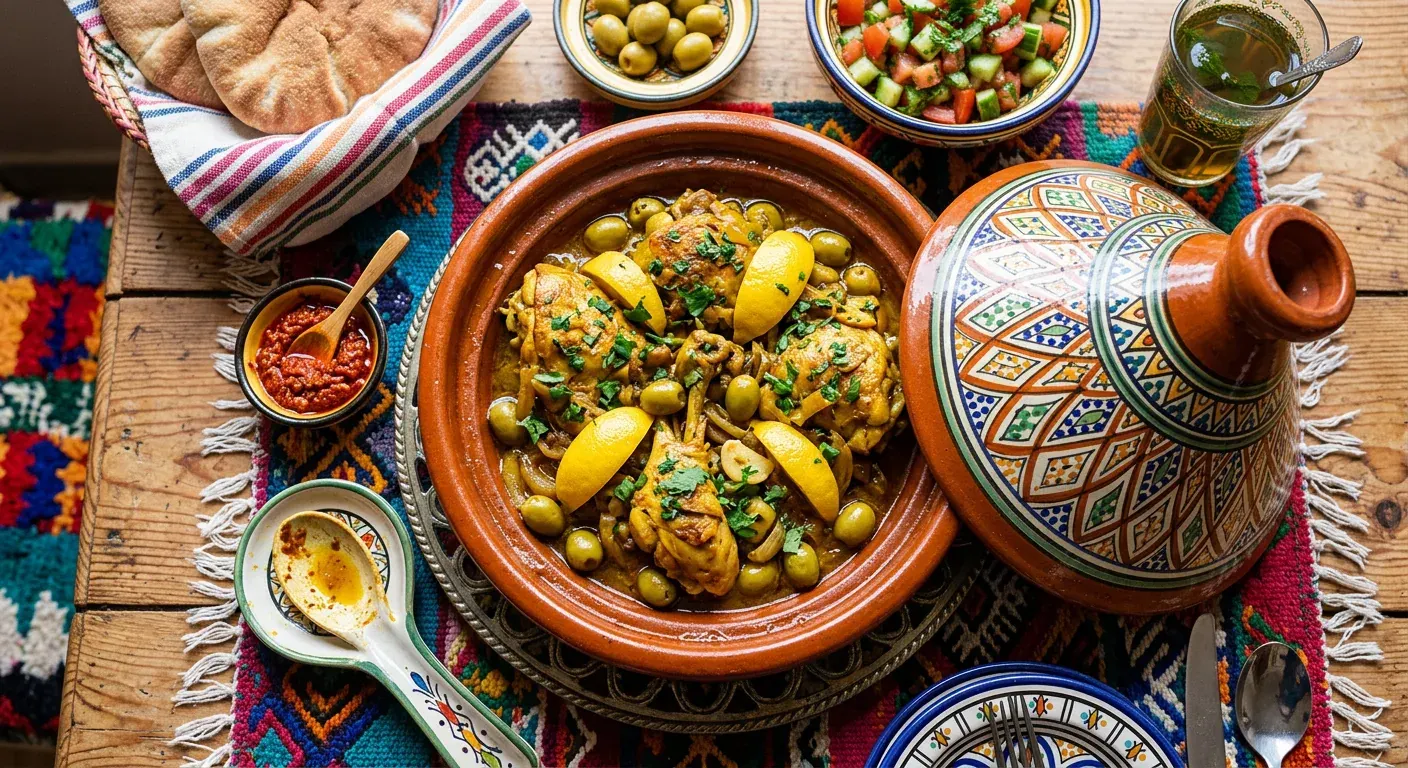
Every visitor to Morocco hears about the tagine within the first day. The conical pot, the slow-melting onions and preserved lemon, the meat falling off the bone — it is a genuine pleasure. But in Agadir, treating the tagine as the whole story misses the point: this is a fishing city on the edge of the argan-rich Souss, and its real food is the Atlantic catch and the produce of the plain behind it. Here is what the rest looks like.
The fishing port and its grills
Agadir runs one of Morocco's busiest sardine ports, and the most honest meal in the city is the port grill: you walk the stalls, pick your fish from the ice — sardines, sea bream, prawns, calamari — and they cook it over coals with nothing but lemon and salt, for a fraction of resort prices. Add a plate of fried fish, some bread and a tomato salad, and you have eaten the way the city eats. Go at lunch, when the catch is freshest.
The marina restaurants offer a smarter version of the same idea — fish tagine, grilled platters and sea views — and are the place for an unhurried evening. Ask your guide which port stalls are best, or let us build it into a food experience.
Tagine and couscous, done the Souss way
Inland from the beach, the tagine comes into its own. A fish tagine with chermoula, tomatoes and preserved lemon is the local twist on the coast; further into the Souss you find chicken with olives, lamb with prunes, and the great Friday couscous — semolina steamed over a fragrant broth of seven vegetables. Eat it slowly, scooped with bread; this is the everyday glory of Moroccan home cooking.
A Berber feast on the road
On a day trip into the Anti-Atlas or up toward Paradise Valley, the village lunch is its own highlight: a slow-cooked tagine or méchoui roast lamb, salads of the season, olives and oil pressed nearby, and mint tea poured from a height. Eaten in a Berber home or a roadside guesthouse, unhurried and generous, it is one of the most memorable meals the region offers — communal, quiet and quietly theatrical.
Argan, amlou and the morning table
The Souss is the only place on earth where the argan tree grows in abundance, and its oil defines the local breakfast. Look for amlou, the addictive spread of argan oil, almonds and honey, alongside msemen (flaky pan-bread), baghrir(a thousand-hole pancake) and fresh orange juice from the Souss groves. A visit to a women's argan cooperative lets you taste cosmetic and culinary oil at the source — and buy the real thing.
Vegetarian and vegan eating in Agadir
Agadir is one of the easier places in Morocco to eat plant-based. Vegetable tagines, zaalouk (smoky aubergine), taktouka (pepper and tomato), lentils, bissara (split-pea soup), couscous with seven vegetables and a mountain of bread make a satisfying meal with no meat. Argan oil and amlou are vegan-friendly. Ask whether a tagine uses meat stock, and note that couscous is sometimes steamed over a meat broth. Most restaurants accommodate dietary requests readily.
Cooking classes and cooperatives
A half-day cooking class is one of the best single experiences Agadir offers. The format we prefer begins with a market walk through Souk El Had to source ingredients, then a session in a home or cooperative kitchen — learning to make a tagine, salads and bread, sometimes with a focus on Souss and argan specialities. You eat what you make, and your money supports local livelihoods. We include this in our cultural tours and can arrange it as a standalone for guests travelling independently.
What to drink
Morocco is a Muslim country; alcohol is available in licensed restaurants, hotels and resort bars but not everywhere. The default is sweet mint tea, poured from a height and offered as a gesture of welcome, alongside strong coffee. Fresh orange and avocado-almond juices are everywhere and excellent. Tap water is treated but most guests drink bottled or filtered water for taste, especially on day trips.
Frequently asked
Is Agadir food spicy?
Souss cooking is fragrant rather than fiery. Cumin, ginger, saffron, preserved lemon and ras el hanout are the dominant notes. Chilli is rarely built into a dish; a side of harissa is offered if you want heat. Visitors with low spice tolerance almost never have an issue, and seafood here is usually grilled simply with lemon and salt.
What is the signature dish to try in Agadir?
Grilled fish straight from the port is the headline — sardines, sea bream and prawns cooked over coals and squeezed with lemon. Beyond that, try a fish tagine with chermoula and preserved lemon, and the local amlou (argan-almond-honey spread) at breakfast. Agadir's Souss roots also mean excellent tagines and, on special occasions, a slow-cooked Berber feast.
What should vegetarians and vegans order in Agadir?
Agadir is easy for plant-based eating. Vegetable tagines, zaalouk (smoky aubergine), taktouka (pepper and tomato), lentils, bissara (split-pea soup), couscous with seven vegetables and plenty of bread make a generous meal. Argan oil and amlou are vegan-friendly. Ask whether a tagine uses meat stock, and note that some couscous is steamed over a meat broth.
What are the best food experiences in Agadir?
The fishing-port grills, where you pick your fish from the ice and they cook it on the spot, are the essential one. Add an argan-cooperative visit to taste amlou and culinary oil at the source, a wander through Souk El Had's spice and produce gates, and a seafood dinner at the marina. A Berber village lunch on a day trip rounds out the picture.
Can you do a cooking class in Agadir?
Yes, and it is one of the best half-days of an Agadir trip. A good class begins with a market walk through Souk El Had to source ingredients, then a home or cooperative kitchen to cook a tagine, salads and bread — and you eat what you make. Some classes focus on Souss specialities and argan. We include this option in several cultural itineraries.
Is tap water safe to drink in Agadir?
Tap water in Agadir is treated and generally considered safe, but it is chlorinated and most visitors and locals drink bottled or filtered water for taste. Restaurants cook with treated water without issue and ice in established places is fine. When out on day trips into the mountains, stick to bottled water.
Eat well in Agadir
We'll build a culinary thread through your itinerary.
From a port-grill seafood lunch to a Souk El Had market walk, an argan-cooperative tasting and a tagine class, Agadir Tours weaves the best of the local table into every programme — including dietary accommodations arranged in advance.
Enquire about a culinary itinerary