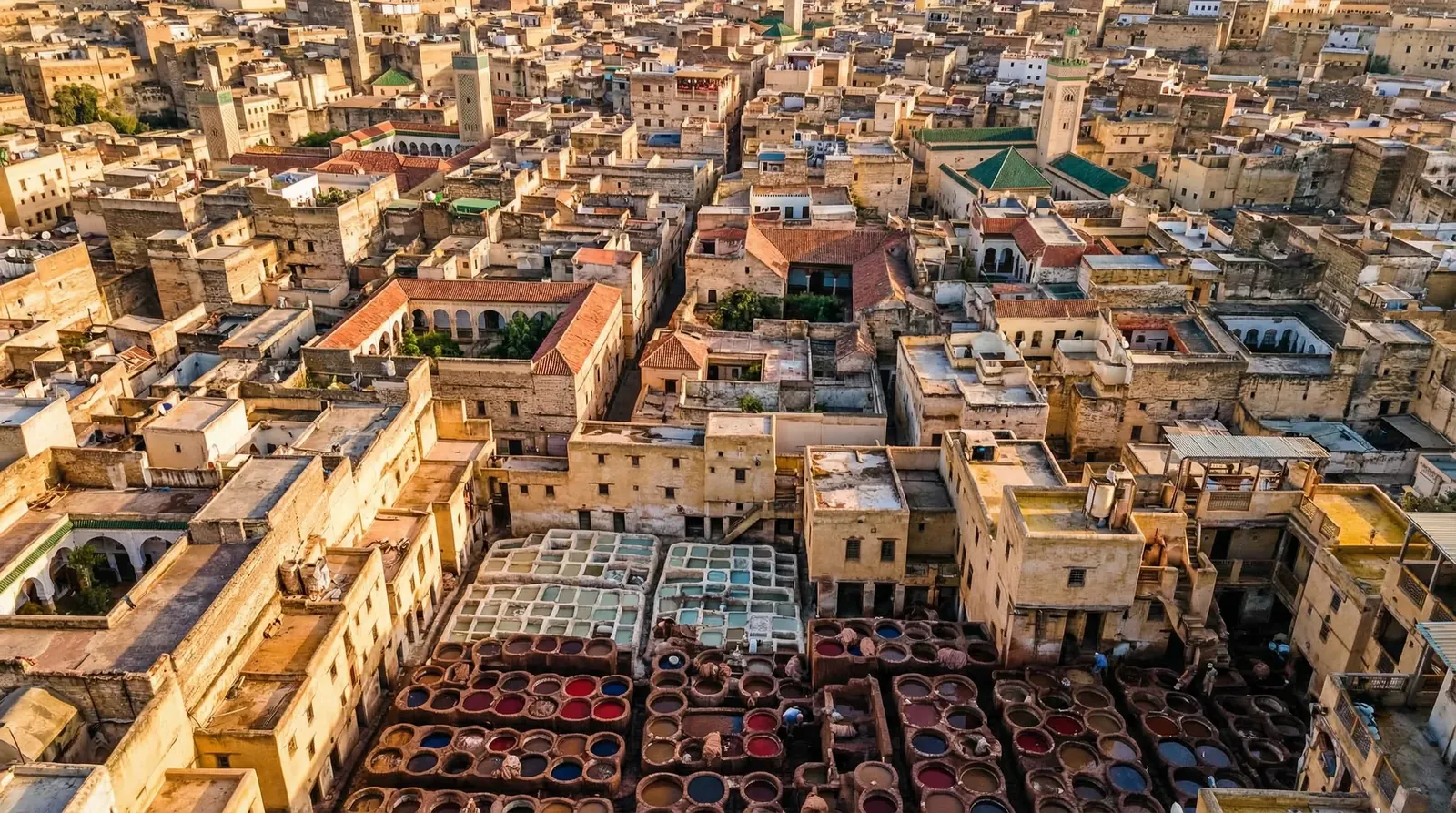
Souk El Had is the beating commercial heart of Agadir — a vast walled market said to hold several thousand stalls, and one of the biggest in the whole country. Unlike the labyrinth of an old medina, it is laid out with a kind of logic: a perimeter wall pierced by numbered gates, each leading into a different trade. It is a local market first and a tourist one second, which is exactly why it is worth your morning.
The case for a local guide
You can walk Souk El Had unaccompanied — the numbered gates make it navigable — but a local guide turns a sprawling market into a focused morning. They will steer you to the genuine argan cooperatives rather than the cut-oil stalls, the best amlou and spice sellers, and the craft sections worth your time, while keeping prices fair. Budget around 150–300 MAD for a couple of hours; we arrange a guide as part of any Souk El Had visit.
Argan, amlou and spices
The Souss is argan country — the gnarled trees grow nowhere else on earth in such numbers — and Souk El Had is the place to buy it. Look for cosmetic-grade oil from a women's cooperative, the nuttier culinary oil, and amlou, the addictive spread of argan oil, almonds and honey. Nearby, the spice stalls pyramid cumin, ras el hanout, saffron from Taliouine and dried roses; ask to smell before you buy, and buy small.
Go soon after the market opens for the freshest produce and the coolest air — by late morning the lanes fill and the unshaded sections heat up. Your guide will time it correctly.
Ceramics, leather and the craft gates
Deeper in, the craft gates hold hand-painted tagines and bowls, leather babouches and bags, Berber rugs and woven baskets, brass lamps and carved wood. Prices are gentler than in the big imperial-city bazaars, and a friendly negotiation is expected on souvenirs. Walk a few stalls before you commit so you have a feel for the going rate, then settle warmly.
Halfway round, pause at one of the mint-tea or fresh-juice stalls. Sitting for ten minutes with a glass of tea, watching the market move, is the best way to understand the place before you carry on.
The food market and local life
The sections most visitors skip are the most revealing: the towering fruit and olive stalls, the fish counters bright with the morning's catch from the port, the bread and the household everything. This is where Agadiris actually shop, and it is effectively fixed-price — no haggling, just daily trade. Wander it slowly; it is a free, vivid lesson in how the city eats. The numbered gates make it easy to find your way back out.
Combining the souk with the kasbah
A market morning pairs naturally with a late-afternoon climb to the Agadir Oufella kasbah for the great view over the bay, or with a stroll along the marina and beach promenade. Together they make a full and varied day in the city. Ask us when you enquire about an Agadir city itinerary.
For lunch, skip the souvenir-heavy frontage and find a simple grill or tagine house in the new town, or head to the fishing port, where you pick your fish from the ice and they cook it simply — better food at a fraction of the resort price.
The best time to visit
Souk El Had trades most days and is busiest at weekends, with Sunday the traditional grand market day; it is usually closed on Mondays. Thanks to Agadir's mild climate it is good year-round, but spring and autumn are the most comfortable. Whenever you go, aim for the morning — fresher produce, cooler lanes and a calmer crowd.
If you are buying argan oil to take home, ask your guide to introduce you to a cooperative so you know exactly what you are getting and the makers are paid fairly.
Frequently asked
Do you need a guide to explore Souk El Had?
Not strictly — the market is organised behind numbered gates, so you can wander freely — but a local guide saves time and points you to the genuine argan cooperatives, the best spice and amlou stalls and the craft sections worth your dirhams. First-timers often find the sheer scale overwhelming, and a guide turns a maze into a morning. Go early, before the heat.
How much does a local guide for Souk El Had cost?
Expect to pay around 150–300 MAD for a couple of hours with a licensed local guide who walks the market with you. Agree the price before you start. A good guide makes introductions to makers, helps you avoid cut argan oil and ensures fair prices — usually saving you more than the fee.
How much time do you need at Souk El Had?
Two to three hours covers the main sections at a comfortable pace: the argan and amlou, the spices, the fruit and olives, the ceramics and leather, and the household and textile gates. Keen shoppers and photographers can easily spend half a morning. Go soon after it opens to beat the midday heat and the crowds.
When is Souk El Had open?
Despite the name — 'El Had' means Sunday — the market trades most days and is busiest at weekends, with Sunday the traditional grand market day. It is usually closed on Mondays. Mornings are best for the fresh produce and the cooler air; many craft stalls stay open into the afternoon. Always confirm current hours locally, as they shift around holidays.
Is Souk El Had safe and easy to reach?
Yes. Souk El Had sits on the edge of the new town, a short petit-taxi ride or walk from the beach hotels, and the market is calm and welcoming by Moroccan standards. The walled enclosure is easy to navigate by its numbered gates. A polite but firm 'la, shukran' ends any persistent pitch, and keeping valuables zipped away is the only real precaution in the crowd.
What is the best time of year to visit?
Souk El Had is good year-round thanks to Agadir's mild climate, but spring and autumn bring the most comfortable temperatures. Summer mornings are pleasant before the heat builds; winter days are warm and quiet — one of the reasons Agadir is such a reliable cool-season escape. Whenever you go, aim for the morning.
Ready to explore Souk El Had?
We'll arrange a local guide and the right market morning.
Every Agadir Tours souk programme includes a guided walk with a local guide, a private transfer from your hotel, and introductions to the argan cooperatives and craftspeople we trust.
Request a Souk El Had visit