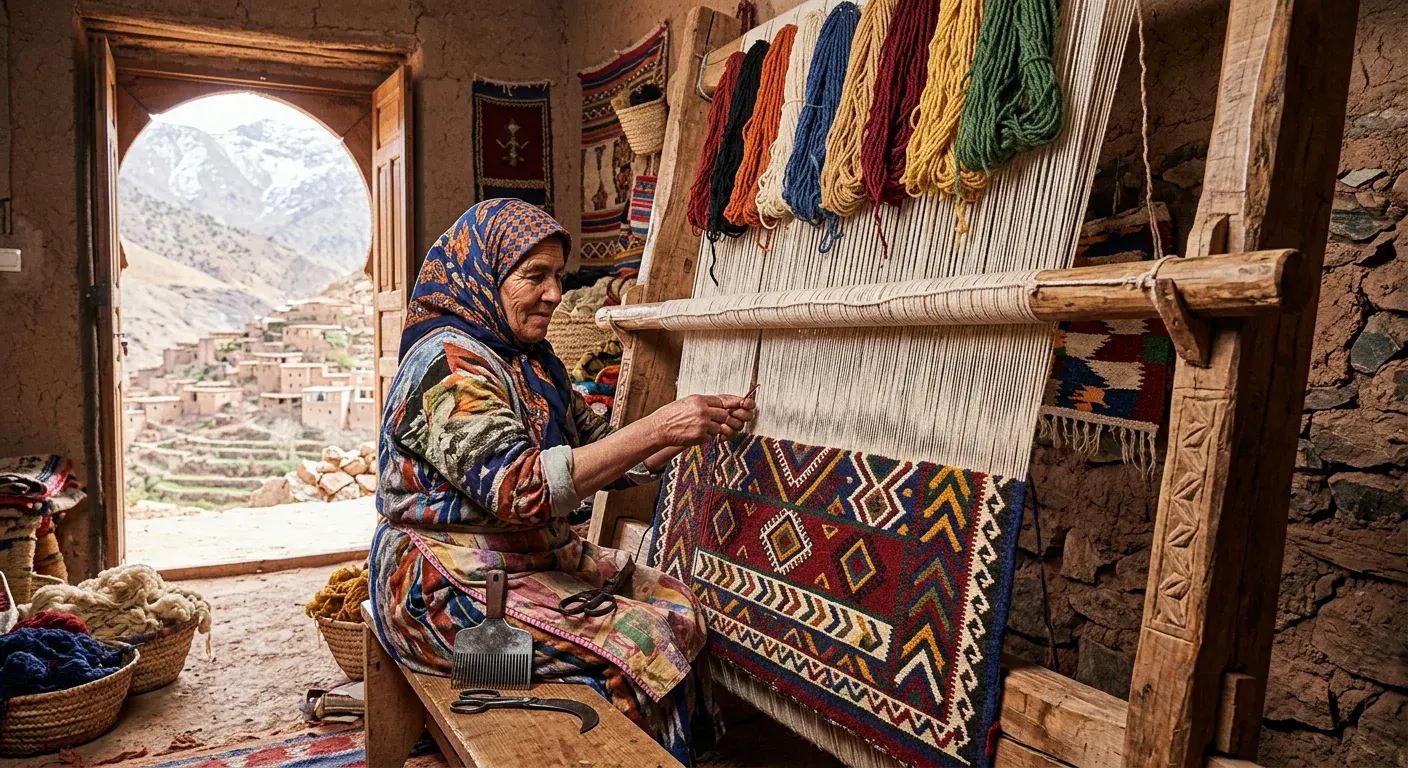
Agadir is not the hard-bargaining bazaar of the imperial cities, and that is part of its charm. The best shopping here is the great walled market of Souk El Had and the women's argan cooperatives on the roads inland — where you can watch the work being done and buy direct from the maker. Knowing where to look turns souvenir-hunting into a window onto how the Souss actually lives and creates.
What are the best things to buy in Agadir?
The quality purchases are tied to the Souss and its crafts. Argan oil and amlou are the signature buys — cosmetic oil for skin and hair, nutty culinary oil for the kitchen, and amlou (argan, almonds and honey) for breakfast; a cooperative bottle of cosmetic oil runs roughly 70–150 MAD. Spices and saffron from nearby Taliouine are excellent. Leather babouches, hand-woven Berber rugs and cushion covers, hand-painted ceramics and tagines, brass lamps and woven baskets are all characterful and useful.
Items to approach with caution: cheap "argan oil" sold near the beach, which is often cut or not cosmetic-grade; "Berber antique" silver, which is frequently modern reproduction; and mass-produced trinkets dressed up as handmade. The surest way to buy well is to purchase from a cooperative or watch something being made before you pay.
Where should you shop for each craft?
Souk El Had is the city's market heart: behind its numbered gates lie argan and amlou, spice pyramids, olives and dates, leather, ceramics and rugs. Women's argan cooperatives on the road toward Paradise Valley and Taroudant are the place for genuine oil and amlou, with the pressing on view. On a day trip, Taroudant is known for Berber silver and a relaxed walled souk, while Tiznit, to the south, is Morocco's silver-jewellery town. The marina boutiques carry pricier, curated craft for those short on time.
How does bargaining actually work in Agadir?
Agadir's bargaining is gentle. At the craft, leather and souvenir stalls the first price has some give; the food, produce and cooperative prices are essentially fixed. A few principles we tell every guest:
- Where bargaining applies, counter at around 50–70% of the opening price and settle modestly higher.
- Don't reveal your budget; let the seller make the first moves.
- Smile and stay warm. Souss shopping is sociable, not adversarial.
- Walking away calmly may bring a small final discount, but the gap is modest at this local market.
- Once a price is agreed, honour it. Changing your mind after acceptance is considered rude.
- Cooperatives sell at fair fixed prices — a useful reference point for value, even if you don't buy there.
How do you ship large purchases home?
Reputable rug and craft dealers can arrange international freight. A rolled Berber rug shipped to London or New York typically costs US$120–350 and arrives within two to four weeks. Always ask for a detailed receipt listing the item, dimensions, material and agreed price, and photograph it.
For smaller items, DHL, FedEx and Aramex have offices in Agadir and will accept packages at the counter. The national post is inexpensive but slow and best reserved for non-fragile textiles.
What should you know about argan oil?
Argan is the real treasure of the Souss — the tree grows nowhere else on earth in such numbers, and the oil is hand-pressed, traditionally by Berber women, in a slow, labour-intensive process. The best oil is cooperative-pressed, properly labelled, and sold in tinted glass (light degrades it); cosmetic oil should smell faintly nutty, culinary oil richer and toasted. Watch the pressing at a cooperative before you buy, and avoid the cheap, unlabelled "argan" hawked near the beach, which is frequently cut with cheaper oils. The cooperatives are a particularly good place to buy, both for quality and for the women's livelihoods they support.
How do you shop with a guide?
A knowledgeable local guide changes the experience entirely. We take our guests to the working makers — a women's argan cooperative on the argan road, a potter glazing tagines, a rug seller who can read a weave — where you buy direct, at fair prices, and understand what you are buying. Our private guides are independent — they receive no commission from any shop, which means they take you where the quality is, not where the margin is. See our Agadir destination guides for the broader picture, or browse our private tours that include a curated crafts and argan morning.
Frequently asked
What are the best things to buy in Agadir?
Argan oil and amlou (the argan-almond-honey spread), spices and saffron, leather babouches and bags, Berber rugs and cushion covers, hand-painted ceramics and tagines, brass and woven baskets are the standout buys. Many come from women's argan cooperatives and Souk El Had stalls, so your money can support the makers directly.
Is bargaining expected in Agadir's souks?
For crafts and souvenirs, mildly — and more gently than in the big imperial-city medinas. At Souk El Had's craft, leather and souvenir stalls a polite negotiation is fine; expect 20–35% off the asking price, not a halving. The food, spice and produce sections, and most cooperatives, are fixed-price, and pushing too hard there is considered impolite.
How do I avoid buying low-quality goods?
Buy from argan cooperatives and craft stalls where you can see the work — women pressing oil, a potter glazing tagines. For 'argan oil', be careful: much cheap oil sold near the beach is cut or not cosmetic-grade, so buy from a reputable cooperative with proper labelling. For 'Berber antique' silver, be sceptical; much sold to tourists is modern reproduction.
Can I ship large purchases from Agadir back home?
Yes. Larger rug and craft dealers can arrange international shipping with freight agents. Expect to pay roughly US$120–350 for a rug shipped to Europe or North America, with delivery in two to four weeks. DHL, FedEx and Aramex have offices in Agadir for smaller parcels. Always get a receipt listing the item, dimensions and agreed price.
Where is best for which products?
Souk El Had, the great walled market, is the one-stop for argan, amlou, spices, leather, ceramics and rugs, arranged behind numbered gates. Women's argan cooperatives on the road inland (toward Paradise Valley and Taroudant) are best for genuine oil and amlou. Taroudant and Tiznit, on day trips, are known for Berber silver and leather respectively.
Do shops accept credit cards?
Larger shops, the marina boutiques and cooperatives in Agadir increasingly accept Visa and Mastercard, sometimes with a small surcharge. Souk El Had stalls and small sellers are cash-only. Carry Moroccan dirhams (MAD) for the souk and market; ATMs are widely available across the city.
Shop smarter
Let a commission-free guide lead the way.
Our local specialists take you to the craftspeople and argan cooperatives, not the tourist shops — and never earn a cut from what you buy.
Request an itinerary