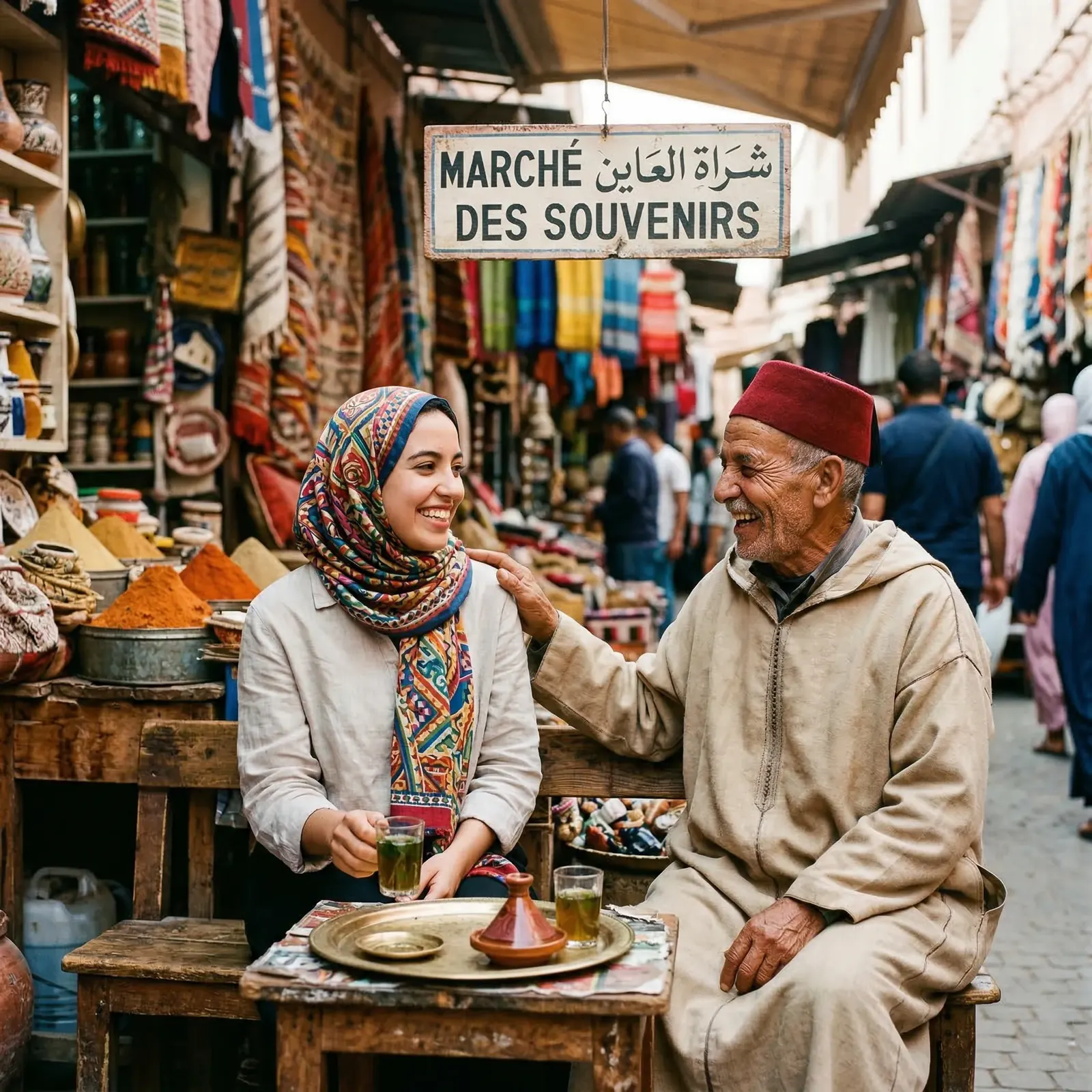
Before any conversation in Morocco, before any deal, before any meal — there is tea. Atay, the sweet green tea brewed with a fistful of fresh mint and poured from a great height into a small glass until it foams. In the Souss around Agadir, it comes with a second local treasure: argan, the oil and the amlou pressed from a tree that grows nowhere else on earth in such numbers. Neither is simply a product. Each is an act of welcome, and a point of genuine pride.
Where did the ritual come from?
Green tea arrived in Morocco through 18th- and 19th-century trade and was quickly married to the country's love of fresh mint and sugar, becoming the national drink and the heart of hospitality. Offering a guest tea is a declaration of welcome; refusing it can seem cold. Argan, meanwhile, is far older — the hardy argan tree has anchored Souss life for centuries, its nut hand-cracked and pressed by Berber women into an oil prized for cooking and for skin. Together, mint tea and argan are the signatures of a welcome around Agadir.
How is Moroccan mint tea actually made?
The process is deliberate and a little theatrical. Gunpowder green tea is rinsed, then brewed in a curved-spout pot with a generous bunch of fresh spearmint and a brick of sugar. The host pours a glass and tips it back into the pot once or twice to mix the brew, then serves by pouring from on high — a foot or more above the glass — to aerate the tea, soften it and build the little crown of foam (keskma) that marks a glass made with care. It is sweet, hot and aromatic, refilled as long as the conversation lasts.
What does the argan ritual involve?
In a Souss village or a women's cooperative, you can watch the whole argan ritual: the nuts cracked between two stones, the kernels gently roasted for culinary oil (left raw for cosmetic), then ground in a stone quern and pressed by hand. It is slow, communal, song-accompanied work. The reward is the tasting — cosmetic oil for the skin, nutty culinary oil for bread, and amlou, the addictive spread of argan, almonds and honey that defines the local breakfast.
What is the etiquette for guests?
A few points of etiquette matter. Accept the glass with your right hand and do not rush — the glass is small and the conversation is the point. Three glasses is the traditional run, and there is a Maghrebi saying that the first is gentle as life, the second strong as love, the third bitter as death — so staying for all three is the gracious thing. In a shop or souk, accepting tea does not obligate you to buy anything, whatever the sales pressure implies — it is a sincere gesture of welcome, and you can leave gracefully after the glass. At an argan cooperative, buying a bottle or a jar of amlou directly supports the women who made it.
Are there regional variations?
Yes. In the Souss and the Anti-Atlas, the Berber welcome often pairs the tea with amlou and fresh bread, and in the mountains other herbs — wild thyme, sage, verbena, even saffron from nearby Taliouine — join or replace the mint by season. In Agadir's cafés and the marina you will also find nous-nous, the half-coffee, half-milk glass. And everywhere, from a fishing-port stall to a roadside café on the argan road, you will be handed a small glass of sweet mint tea — and it will be just as warmly meant.
Can you recreate it at home?
With a little attention, yes. For the tea, gunpowder green tea, a generous bunch of fresh spearmint and sugar to taste are the essentials; a curved-spout teapot helps with the pour. Argan oil and amlou travel well and are the most evocative souvenirs of the Souss. Many of our guests bring a teapot and a jar of amlou home from Souk El Had as the keepsake they are happiest to have chosen.
Frequently asked
What is Moroccan mint tea and how is it made?
Moroccan mint tea — atay or 'Berber whisky' — is green gunpowder tea brewed with a generous bunch of fresh spearmint and a lot of sugar, then poured from a height into small glasses to aerate it and build a froth. It is sweet, hot and aromatic, served from a curved-spout teapot. The pouring from on high is part technique, part theatre, and a fixture of every welcome.
Why is the tea poured from so high?
The high pour aerates the tea, softens its bitterness and produces the little crown of foam (the keskma) that marks a well-made glass. It also cools the tea slightly and is, frankly, a small performance — a sign of care for the guest. A good host pours the first glass back into the pot once or twice to mix the brew before serving.
What is argan oil and why is it special to this region?
Argan oil is pressed from the nut of the argan tree, which grows in abundance only in the Souss region around Agadir and nowhere else on earth at such scale. Cosmetic argan oil is prized for skin and hair; the nuttier culinary oil and amlou — a spread of argan oil, almonds and honey — are local specialities. A visit to a women's cooperative shows the labour-intensive hand-pressing behind it.
Can you ask for tea with less sugar in Morocco?
You can — ask for it 'b shwiya d sukar' (with a little sugar) or without — and most hosts will oblige, though very sweet tea is the traditional default and a sugarless request mildly surprises traditionalists. Many cafés now serve the sugar separately on request so you can sweeten to taste.
Is there a specific time of day for mint tea?
No fixed time — mint tea is appropriate at any hour. It marks arrivals, closes every meal, seals a deal in the souk and fills the long afternoons. In a Berber home or a shop, it is the first thing offered to any guest. The ritual is about hospitality and welcome, not the clock.
Experience it properly
Tea and amlou at a Souss argan cooperative.
Every Agadir Tours itinerary opens with a welcome tea on arrival. We can also arrange a visit to a women's argan cooperative, including the history and technique behind the ritual and a proper tasting.