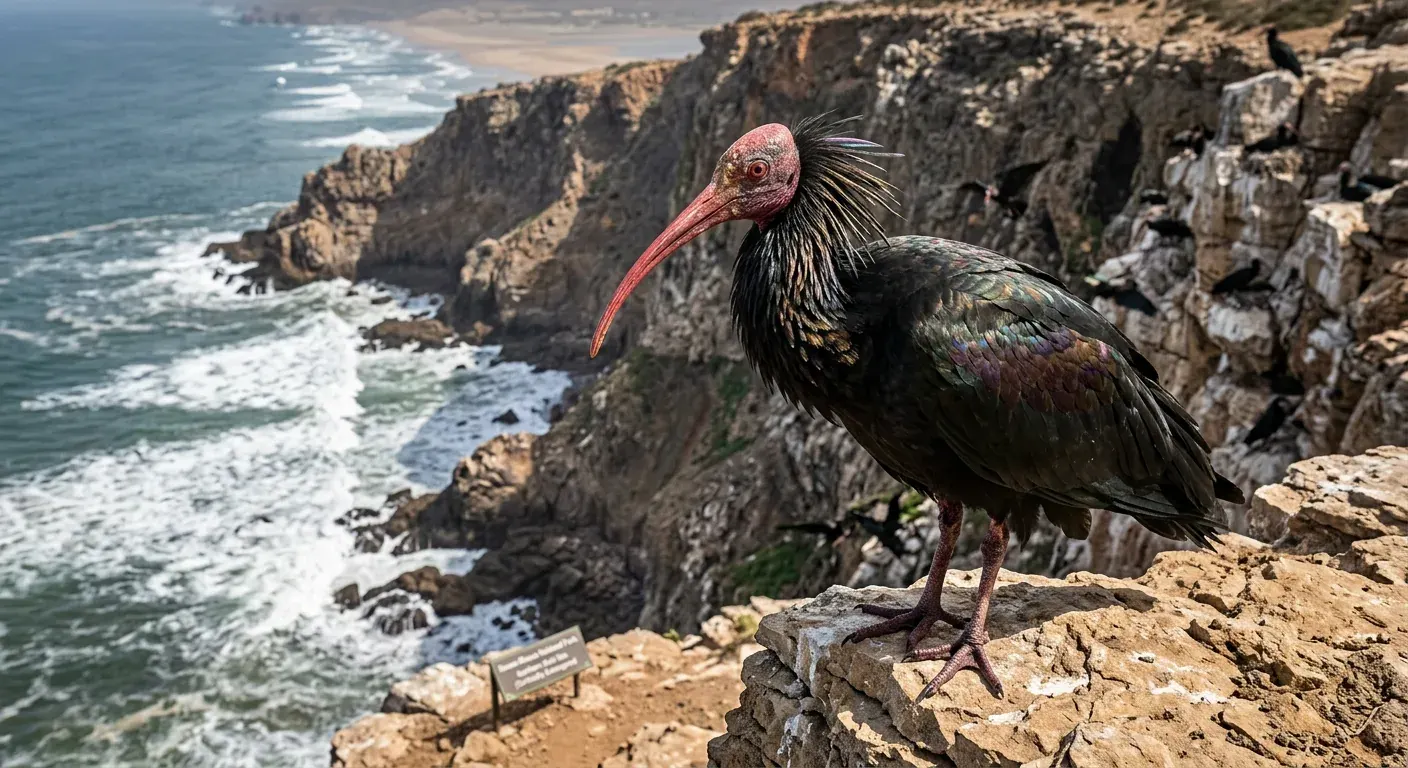
Stretching along the Atlantic coast south of Agadir between the Souss and Massa river mouths, Souss-Massa National Park protects estuaries, dunes and steppe. It is best known as a refuge for the rare northern bald ibis and as a reserve for reintroduced Saharan wildlife.
Souss-Massa shelters one of the last wild colonies of the critically endangered northern bald ibis. The cliffs near Tamri and the Massa estuary are among the most reliable places in the world to see this rare bird.
02Nature
Birdwatching at the Massa Estuary
Where the Massa river meets the sea, reedbeds and lagoons draw flamingos, spoonbills, herons and migratory waders. The estuary is one of Morocco's premier birding sites, especially during spring and autumn migration.
03Nature
The Wildlife Reserve at Rokein
Fenced reserves within the park have been used to reintroduce Saharan species such as scimitar-horned oryx, addax, dorcas gazelle and ostrich, part of conservation programmes aimed at returning them to the wild.
04Nature
Walk the Coastal Dunes
The park's shoreline mixes long sandy beaches with low dunes and scrub. Quiet walks along this stretch of wild coast feel a world away from the resort beaches of Agadir to the north.
05Beach
Sidi Rbat Village & Beach
A small fishing settlement at the heart of the park, Sidi Rbat sits beside a sweeping beach and the Massa estuary. Local legend even ties it to the tale of Jonah and the whale.
06Nature
Guided Nature Walks
Local guides lead walks through the estuaries, reedbeds and steppe, helping visitors find birds and wildlife and explaining the fragile ecosystems the park was created to protect in 1991.
07Nature
The Argan Forest Fringe
Inland, the park borders the argan woodlands that define the Souss region. The endemic argan trees and the goats that famously climb them are a characteristic sight on the approaches to the park.
08Nature
Photography & Sunsets
Big skies, estuary reflections and wheeling flocks make Souss-Massa a rewarding place for landscape and wildlife photography, with sunset over the lagoons and dunes a particular highlight.
09Nature
Massa River Lagoon
The freshwater lagoon and surrounding wetland form the ecological core of the southern part of the park, supporting dense birdlife and offering some of the best vantage points for quiet observation.
10Nature
Cycling the Park Tracks
Quiet tracks through the steppe and along the coast suit gentle cycling, a low-impact way to cover ground between the estuaries, dunes and viewpoints while keeping an eye out for wildlife.
11Culture
Visit a Souss Berber Village
Small farming villages on the park's edge give a sense of rural Souss life, where agriculture, fishing and argan harvesting continue alongside the protected wildlife areas.
12Day trip
Day Trip from Agadir
The park begins just south of Agadir, making the estuaries, bald ibis cliffs and wildlife reserve an easy half- or full-day excursion, often combined with the coast road toward Tiznit.
Frequently asked
What is Souss-Massa National Park known for?
Souss-Massa National Park is known above all for the northern bald ibis, one of the world's rarest birds, which survives here in the wild. It also protects rich estuary birdlife and a reserve where Saharan species such as oryx and gazelle have been reintroduced.
How far is Souss-Massa National Park from Agadir?
The park lies immediately south of Agadir, with the Souss estuary on the city's edge and the Massa estuary around 40 to 50 kilometres south, roughly a 45-minute to one-hour drive. It is an easy day trip from the city.
When is the best time to visit for birdwatching?
Spring and autumn migration periods bring the greatest variety of birds to the estuaries, while the bald ibis can be seen year-round near its breeding cliffs. Early morning and late afternoon offer the best light and activity.
See it with a local
Turn this into a private Souss-Massa National Park trip.
We'll build a private, guided plan around the experiences you care about — with a driver, hand-picked riads and a written quote in 24 hours.