Agadir lost its old walled town in the 1960 earthquake, and the rebuilt city is modern and gridded rather than labyrinthine. La Medina d'Agadir — often called the Medina Polizzi after its creator, the Italian-Moroccan artist and craftsman Coco Polizzi — is a deliberate answer to that absence: a hand-built craft medina on the southern edge of the city at Bensergao, raised over many years from local stone, adobe and tadelakt by Moroccan artisans using traditional methods. It is part open-air museum, part living workshop, and an easy, shaded half-day from the beach. Here is what to do inside its walls.
The medina is enclosed by thick earthen ramparts and arched gateways built in the old Souss and Saharan manner, using local stone, pisé and lime. After the modern, low-rise city below, walking through the main gate into the walled enclosure is a deliberate step back toward the kind of fortified town Agadir lost in 1960.
02Crafts
Artisan Workshops
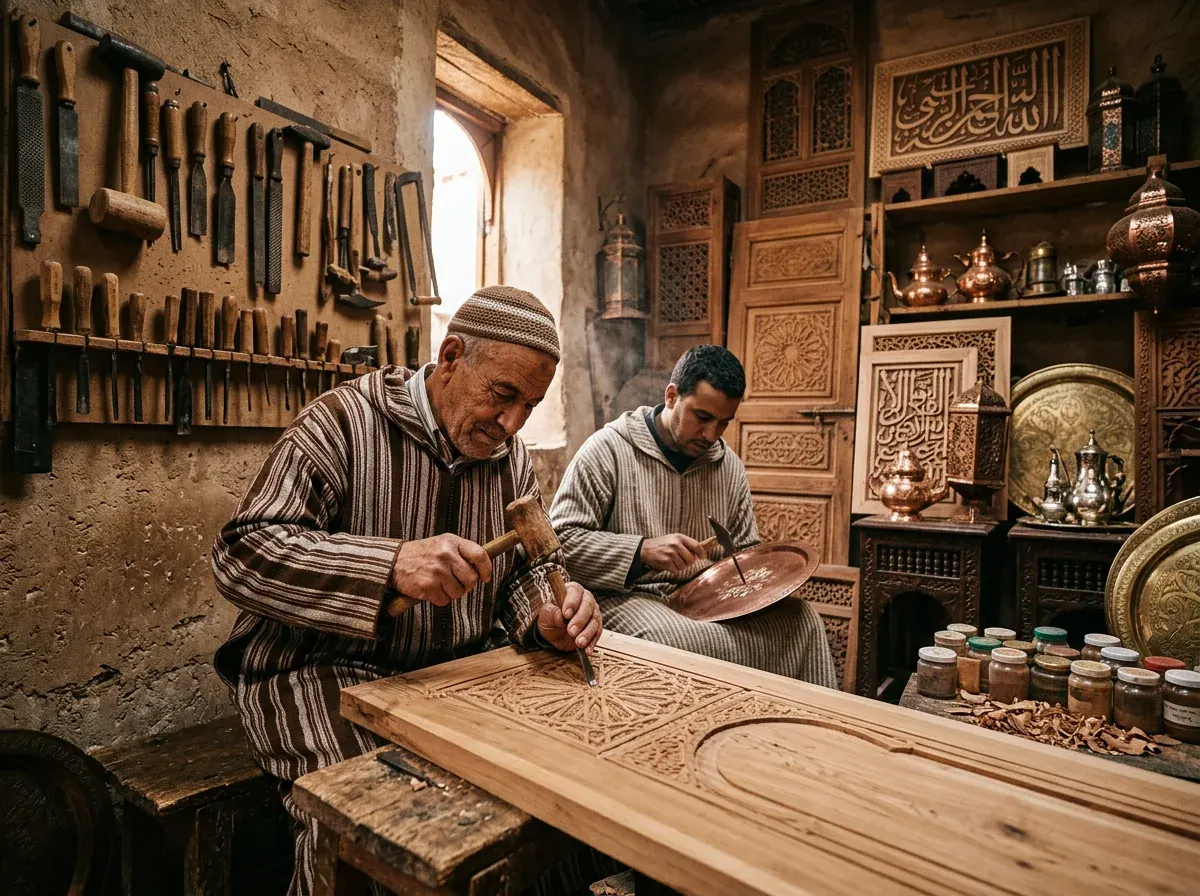
Lanes and courtyards are given over to working ateliers where craftspeople practise jewellery, metalwork, woodcarving, pottery, leather, weaving and tadelakt plaster. Watching the trades being worked by hand — rather than just sold — is the heart of a visit and what sets the medina apart from a conventional souk.
03History
Coco Polizzi's Vision
The medina is the long project of Coco Polizzi, an artist of Italian-Moroccan heritage who set out to revive traditional Agadir building crafts and give the city back a piece of the old-town character the earthquake erased. Many structures were raised slowly, by hand, as a showcase of Berber and Saharan techniques.
04Architecture
Traditional Building Techniques
Look closely at the stonework, carved cedar, zellij tilework and polished tadelakt and you are reading a catalogue of Moroccan craft. The site doubles as a place to learn how these materials are quarried, shaped and finished — earthen walls that stay cool, lime plasters, and joinery cut without modern shortcuts.
05Atmosphere
Courtyards, Fountains & Gardens
Shaded squares, planted courtyards and tiled fountains break up the lanes, with cactus, palms and flowering beds softening the stone. The planting and water give the enclosure a calm, garden-like feel and make it pleasant to wander slowly even in the heat of the day.
06Shopping
Shopping for Crafts
Because goods are often made on site, the medina is a good place to buy directly from makers: pottery, lamps, jewellery, leather, textiles and argan products. Prices tend to be calmer and less pressured than in a busy city souk, though it is still worth comparing and asking politely about cost.
07Photography
Photography & Backdrops
The textured earthen walls, carved doors, tiled niches and dappled light through the lanes make the medina one of the more photogenic spots around Agadir. Mornings and the softer late-afternoon light are kindest for pictures, and the quieter corners are easy to frame without crowds.
08Food & drink
A Cafe or Mint Tea Stop
Tea and simple refreshments are usually available within or beside the medina, giving you a shaded place to pause between the workshops. A glass of mint tea in a tiled courtyard is the traditional way to slow the visit down.
09Experience
Guided Context
Much of what makes the medina interesting is the story behind it — the techniques, the materials and Polizzi's intent — which is easy to miss on a quick self-guided loop. A short guided walk, where available, draws out the craft and history and is worth it for first-time visitors.
10Planning
Combine With the Beach or Souss-Massa
The medina sits on the southern side of Agadir, toward Bensergao, so it pairs naturally with a beach morning in the city or a run further south toward the Souss-Massa estuary and national park. Half a morning or afternoon here fits comfortably into a wider day out.
Frequently asked
What is La Medina d'Agadir (the Coco Polizzi medina)?
It is a purpose-built craft medina on the southern side of Agadir, created over many years by the artist Coco Polizzi using traditional stone, adobe and tadelakt techniques. Because the original Agadir medina was destroyed in the 1960 earthquake, this walled enclosure of ramparts, lanes and artisan workshops was conceived to revive the city's old-town character and building crafts.
Is the Agadir medina an old, historic site?
No — and this is worth knowing before you go. Agadir's genuinely old medina was lost in the 1960 earthquake. The Medina Polizzi is a modern, hand-built recreation in the traditional style rather than an ancient monument. Its interest lies in the living crafts, the architecture and the story of its making, not in age.
What is there to do inside the medina?
You can walk the earthen ramparts and gates, watch artisans at work in jewellery, pottery, woodwork, leather and weaving, shop for crafts directly from makers, rest in shaded courtyards and gardens, and pause for mint tea. It works well as a relaxed, shaded half-day, especially paired with a beach visit.
How much does it cost to visit and how do I get there?
The medina sits on the southern edge of Agadir toward Bensergao, an easy short taxi or drive from the beach and city centre. Entry and any guiding or parking arrangements can change, so check current admission fees and opening hours before you set out rather than relying on older figures.
See it with a local
Turn this into a private Agadir trip.
We'll build a private, guided plan around the experiences you care about — with a driver, hand-picked riads and a written quote in 24 hours.