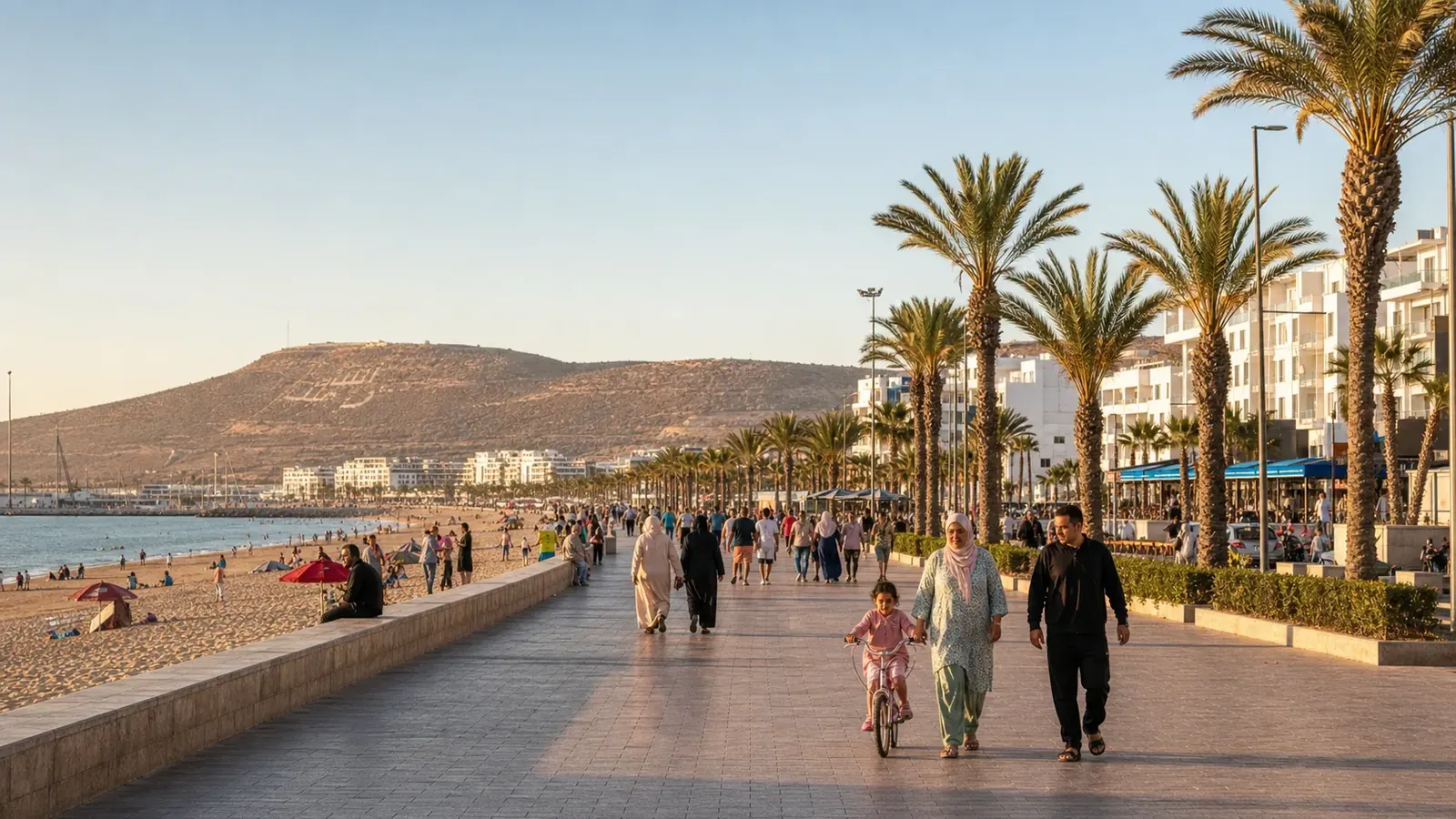
Short answer: yes — you can get by comfortably in English across Agadir's resort and tourist areas. English is widely understood in hotels, on tours, at the marina and in many promenade restaurants and shops; French is Morocco's main second language and is even more universal; and locals speak Moroccan Arabic (Darija) and Tashelhit, the Amazigh (Berber) language of the Souss, among themselves. You will not be stranded. English thins out a little with older taxi drivers, small street vendors and on day trips into smaller towns — but a handful of polite words and a friendly manner cover almost everything. Below is the honest picture, where each language matters, and a short phrase list worth learning.
What languages are actually spoken in Agadir?
Morocco is genuinely multilingual, and Agadir more so than most because it is the Souss region's capital and a long-established holiday city. In everyday life you'll hear several languages layered together:
- Moroccan Arabic (Darija) — the main spoken language of daily life, distinct from the formal Standard Arabic used in writing and the news.
- Tashelhit (Amazigh / Berber) — the indigenous language of the Souss, very widely spoken in and around Agadir. This is real Amazigh country, so don't be surprised to hear it as much as Arabic.
- French — the principal second language, used in business and education and seen on a great deal of signage and many menus; understood almost everywhere.
- English — the common language of tourism, understood by most people who work with visitors, and increasingly by younger Moroccans generally.
- Spanish and German — you'll also hear these in the resort zone, reflecting Agadir's main holiday markets.
Will you get by with only English?
For a standard beach-and-day-trips holiday, comfortably yes. Within the tourist core — your hotel, the promenade, the marina, organised excursions, surf schools and the larger restaurants and shops — English is enough on its own. Where it gets a little harder is at the edges: an older petit-taxi driver, a small grocery or street stall, a rural village on a day trip, or paperwork at a pharmacy. None of these is a real obstacle; they're moments where a few words, a smile and a translation app on your phone do the job. If you're weighing up the city in general, our honest "is Agadir worth visiting?" piece sets the scene, and our things to know before you go covers the wider practicalities.
Where you'll actually use the language
It helps to think about the trip by setting rather than as one big "will I cope?" question. Here's how the language tends to work in the places you'll spend time.
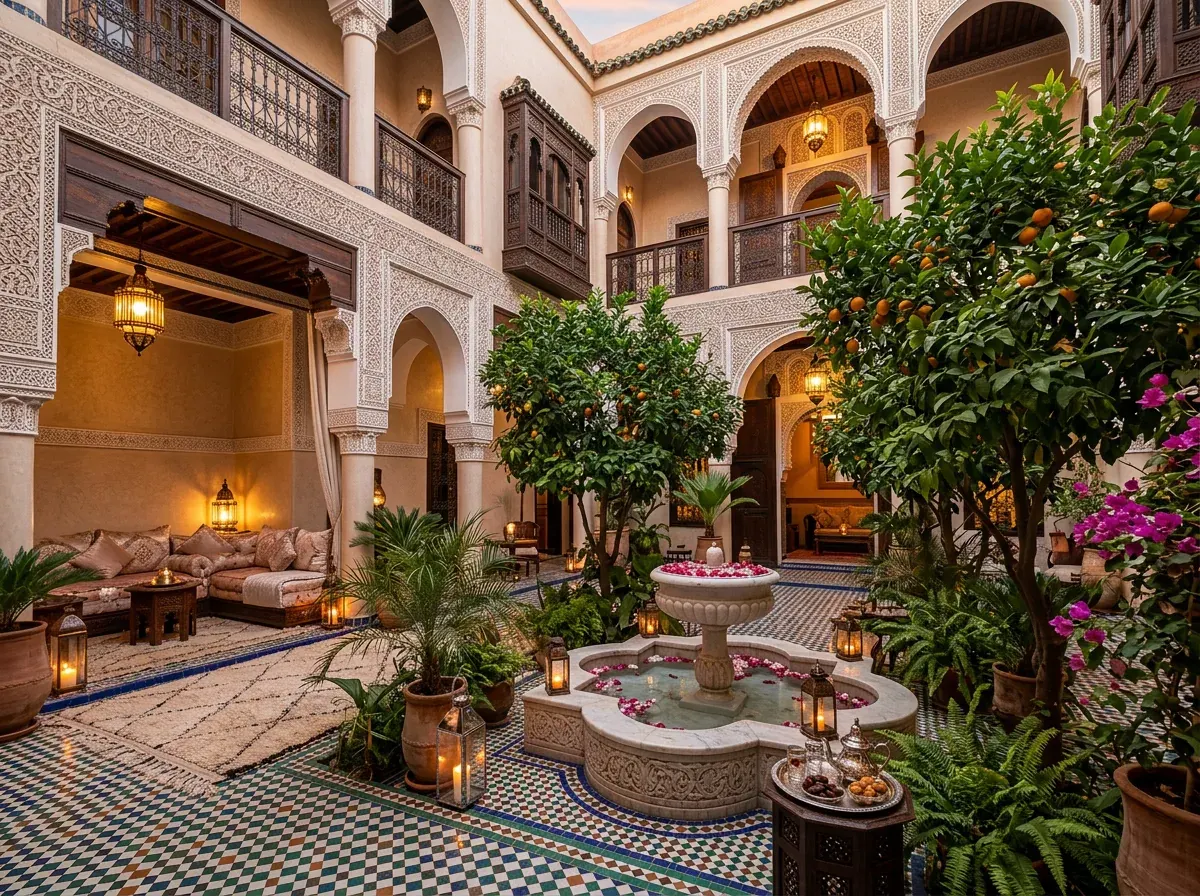
Hotels, resorts & tour desks
English & French, no problem
The easiest part of the trip. Reception, concierge and tour desks at resorts and hotels deal with international guests all day, so English is the norm and French is universal. This is where you'll feel no language barrier at all.
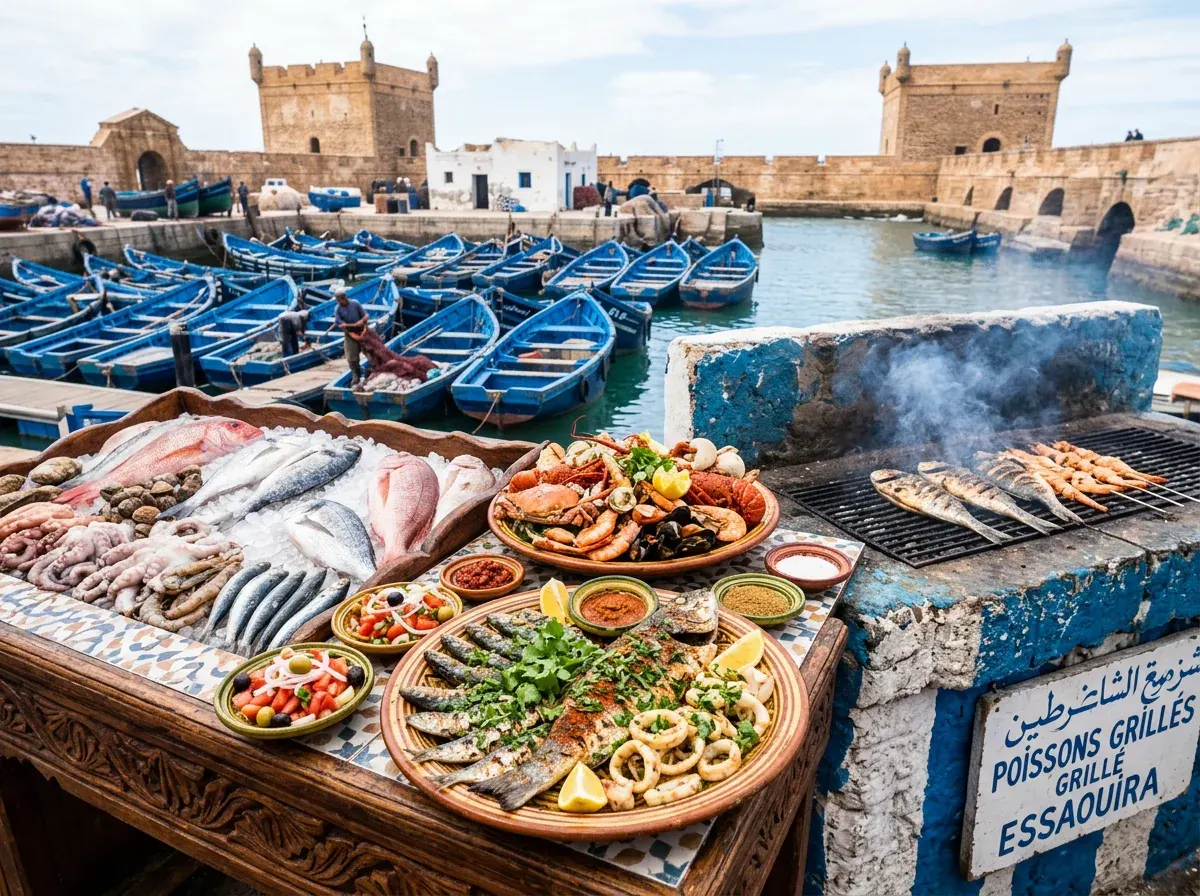
Restaurants, cafés & the marina
Often multilingual menus
Along the promenade and the marina, menus are frequently printed in several languages and staff handle English easily. In simpler local tagine houses away from the strip you'll lean more on pointing and a few words — part of the fun.
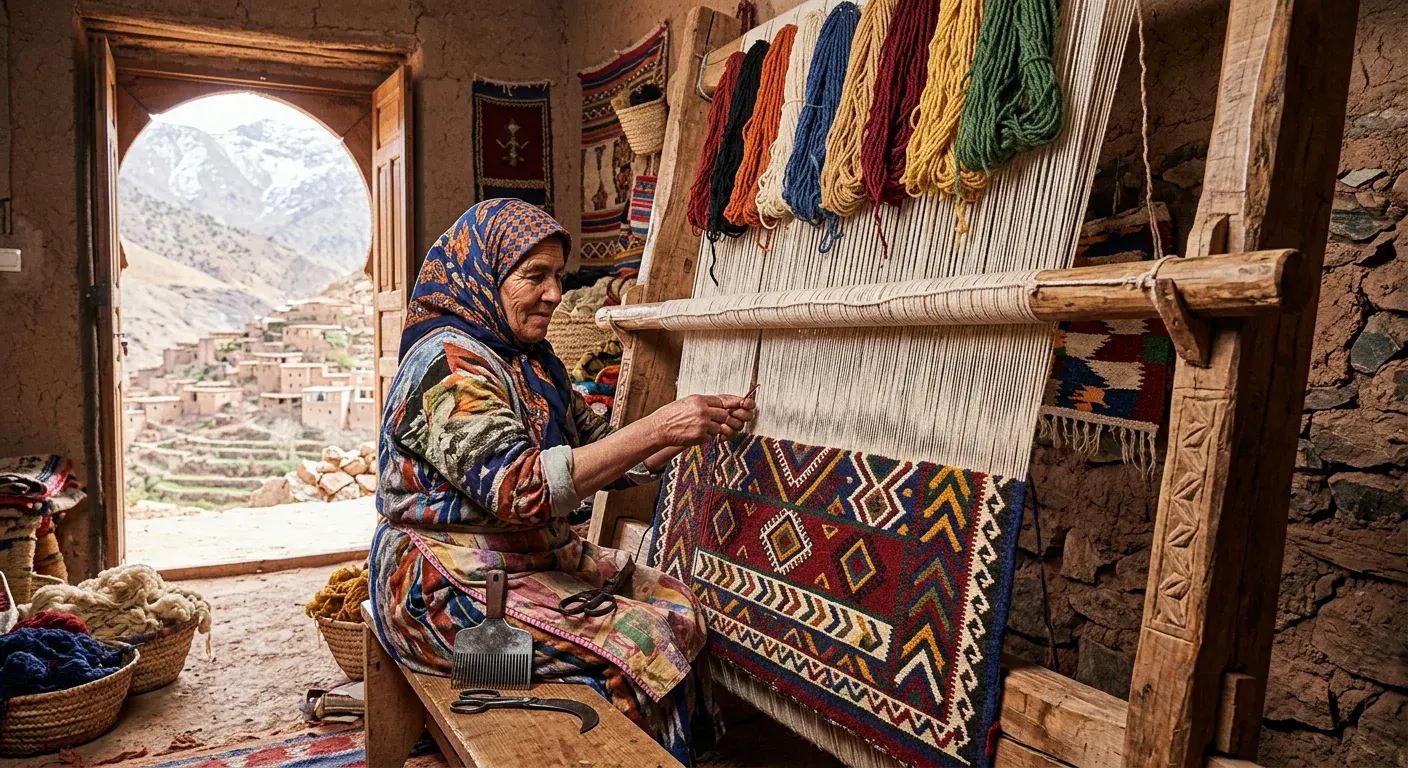
Souk El Had & the shops
Numbers, gestures & a smile
Market sellers are quick, multilingual and used to visitors — many switch between French, English, Spanish and German to make a sale. Knowing the numbers (or having a calculator) helps most, and a friendly manner is worth more than fluent grammar.
Taxis, drivers & day trips
A little French helps
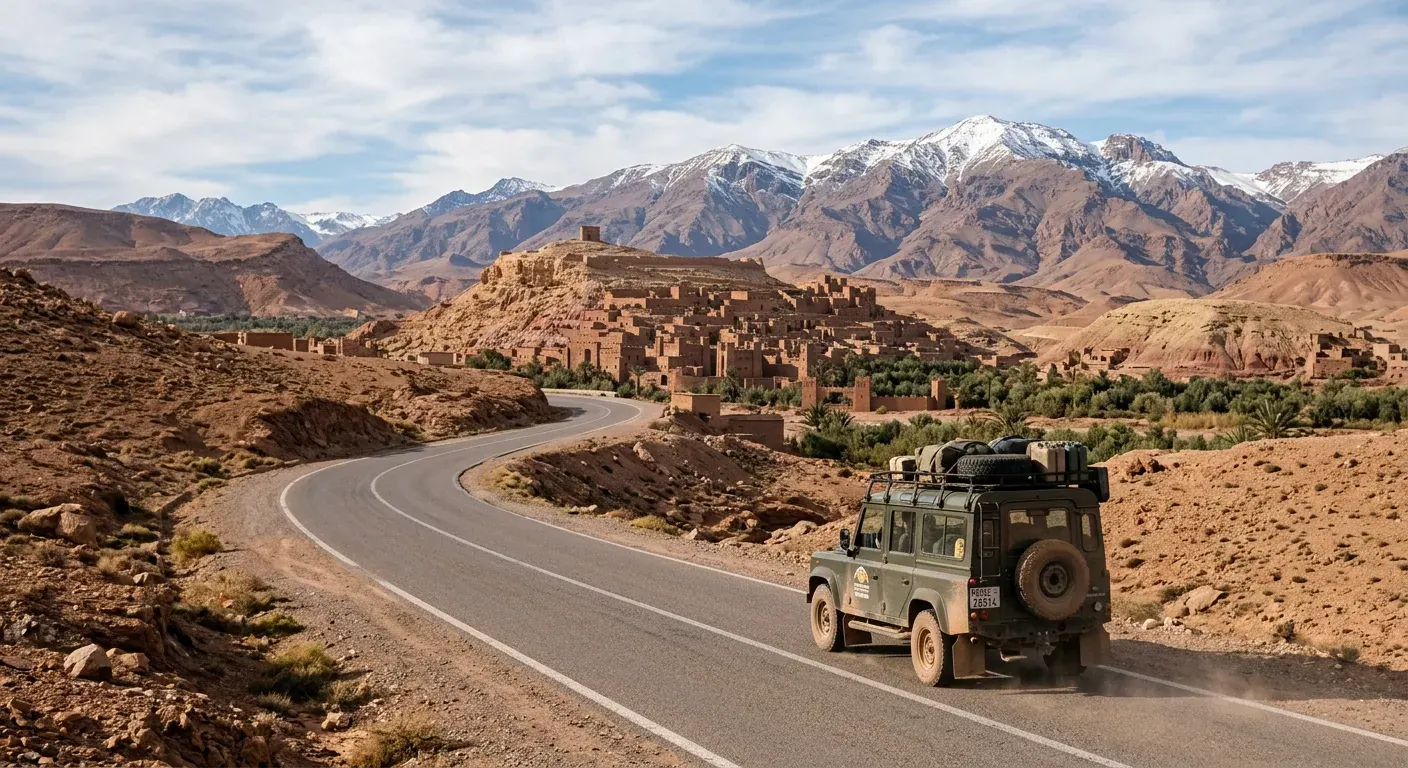
Some taxi drivers speak English, many only a little; a greeting and your destination in French smooth things along. For excursions, an English-speaking driver-guide removes the issue completely and adds the context you'd otherwise miss.
French vs English — which is more useful?
If you only learn a little of one language, make it French. It's more universal across Morocco than English, it's the language of a lot of signage and many menus, and even a few words — a greeting, please and thank you, and the numbers — visibly change how interactions go. That said, English alone is perfectly workable in Agadir's tourist areas, and you should never feel you must be fluent in French to come. Think of French as the bonus that smooths the rough edges, not a barrier to entry.
A few words that earn a smile
You don't need to study, but a handful of words is genuinely appreciated and often opens up warmer exchanges. These spellings are rough phonetic transliterations — pronunciation varies from place to place, and people will happily put you right.
Moroccan Arabic (Darija)
The everyday spoken language.
- Salam / Salam ou alaykoum
- Hello / peace be upon you
- La bas?
- How are you? / all good?
- Shukran
- Thank you
- Bla jmil
- You're welcome
- Smahli
- Excuse me / sorry
- Bshhal?
- How much?
- Wakha
- OK / fine
- Iyeh / La
- Yes / no
Tashelhit (the Souss Amazigh language)
Widely spoken across the Souss region.
- Azul
- Hello
- Tanmirt
- Thank you
- Mani?
- Where?
- Waxxa
- OK
French (always useful)
Morocco's main second language.
- Bonjour
- Hello / good day
- Merci
- Thank you
- S'il vous plaît
- Please
- Combien?
- How much?
- Où est… ?
- Where is… ?
- L'addition, s'il vous plaît
- The bill, please
Want more before you travel? Our Morocco-wide Moroccan Arabic & French phrases guide goes further, and the numbers in particular are worth knowing for the souk — see our guide to haggling at Souk El Had.
Honest practical tips
- Download an offline translation app and the offline language pack before you fly — handy for menus, pharmacies and rural day trips where signal can be patchy.
- Learn the numbers, even just in French. They're the single most useful thing for prices, taxis and the market.
- Save your hotel's name and neighbourhood (a screenshot or card) to show a taxi driver — far easier than describing it.
- Point at menus and use your phone's camera-translate for signs; nobody minds, and it's genuinely effective.
- Open with a greeting in Arabic or French before switching to English — it's polite and tends to be met with warmth.
- For day trips and anything logistical, an English-speaking driver-guide turns the only real language friction into a non-issue and adds the context behind what you're seeing.
How Agadir compares to the rest of Morocco
As an established resort city, Agadir is one of the easier places in Morocco for an English-speaking visitor — on a par with Marrakech's tourist areas and generally more relaxed in feel. The further you go from the coast and the bigger towns — deep into the Anti-Atlas, the small Souss villages, the rural argan country — the more French or a few words of Tashelhit and Darija earn their keep. That contrast is part of the appeal: an easy base, with genuinely off-the-map country a short drive away. Our getting around Agadir guide and the full tours page show how to reach the quieter places with the language handled.
The quick verdict
- You can travel Agadir comfortably in English alone — hotels, tours, the marina and most restaurants and shops are fine.
- French is Morocco's main second language and the most useful extra; a few words go a long way.
- Locals speak Moroccan Arabic (Darija) and Tashelhit, the Souss Amazigh language, among themselves.
- English thins out with older taxi drivers, street vendors and in small towns on day trips.
- Learn the numbers and a greeting, carry an offline translator, and you'll never be stuck.
- For excursions, an English-speaking driver-guide removes the only real friction.
Frequently asked
Do they speak English in Agadir?
Yes, widely enough to travel comfortably. Agadir is Morocco's main beach-resort city, so English is commonly understood by hotel staff, tour guides, marina and many promenade restaurants, surf schools and the larger shops. You will not be stuck. It thins out a little away from the tourist core — with older taxi drivers, small street vendors and in towns on day trips — but a few words and a friendly manner carry you a long way.
Do I need to speak French to visit Agadir?
No, but it helps. French is Morocco's main second language and is more universal than English — used in business, on a lot of signage and menus, and understood almost everywhere. You can have a perfectly smooth trip in English alone within the resort and tourist areas. If you happen to know a little French, you will find it useful with taxis, in the souk and off the beaten track, but it is a bonus rather than a requirement.
What language do local people in Agadir actually speak?
Among themselves, most people in Agadir speak Moroccan Arabic (Darija) and Tashelhit, the regional Amazigh (Berber) language of the Souss — this is the Souss-Massa heartland, so Tashelhit is genuinely widely spoken here, not just Arabic. Standard Arabic appears in writing and the media, French is the main second language, and English is the common tourism language. Most people working with visitors switch easily between several of these.
Will taxi drivers in Agadir speak English?
Some will, especially younger drivers and those who work the hotel and airport runs; many will know only a little. A few words of French (a greeting, the name of your destination, and the numbers) smooths things over, and it always helps to know your hotel's name and area. For petits taxis, agree to use the meter or settle the fare before you set off. For day trips, a pre-booked English-speaking driver-guide removes the issue entirely.
Can I get by with only English on day trips from Agadir?
On an organised tour, yes — guides who work with international visitors speak English (and often several languages). Independently, in smaller places like Taroudant, Tafraoute, the argan cooperatives or rural villages, English thins out and a little French or a translation app becomes more useful. This is one reason many visitors book day trips with a guide: you get the language, the context and the logistics handled in one go.
What are a few useful words to learn before visiting Agadir?
A handful goes a long way and is warmly received. In Moroccan Arabic: salam (hello), shukran (thank you), la bas? (how are you / all good?), smahli (excuse me), and bshhal? (how much?). In Tashelhit, the local Amazigh language: azul (hello) and tanmirt (thank you). In French: bonjour, merci, s'il vous plaît and combien? (how much?). Spellings are rough phonetic transliterations — pronunciation varies, and people will happily correct you with a smile.
No language barrier with us
We'll handle the language so you can relax.
English-speaking driver-guides, the local context behind what you see, and the logistics of every day trip sorted — tell us your dates and what you'd like to do, and we'll build the itinerary.
Around a 7-minute read · Written in-house · We don't quote prices, opening hours or ratings that go stale — check current details when you book.
Agadir, Souss-Massa, Morocco