Short answer: carry cash in Moroccan dirhams for daily life, and keep a card for bigger payments. In Agadir, cash is king at Souk El Had, in small cafés and tagine houses, for taxis, hammams and tips, while Visa and Mastercard work fine at resort hotels, the marina, supermarkets, petrol stations and larger restaurants — with contactless increasingly common in tourist areas. Don't plan to pay in euros: a few places accept them, but the rate rarely favours you. Get your dirhams from an ATM or a regulated exchange bureau once you arrive, and you'll be set.
Why you'll mostly want dirham cash
The Moroccan dirham (MAD) is the only currency that works everywhere here, and a great deal of everyday Agadir runs on cash. The market, the street food, the taxis, the tips and the small family-run places — the stuff that gives the city its texture — simply don't take cards. Cards have their place for the larger, more touristy transactions, but if you arrive expecting to tap a phone for everything you'll be caught out within the first hour. Think of cash as your default and the card as the backup, not the other way round.
Where cards work — and where they don't
It helps to picture the trip by setting. Here's the honest split between the places that happily take a card and the places that want cash.
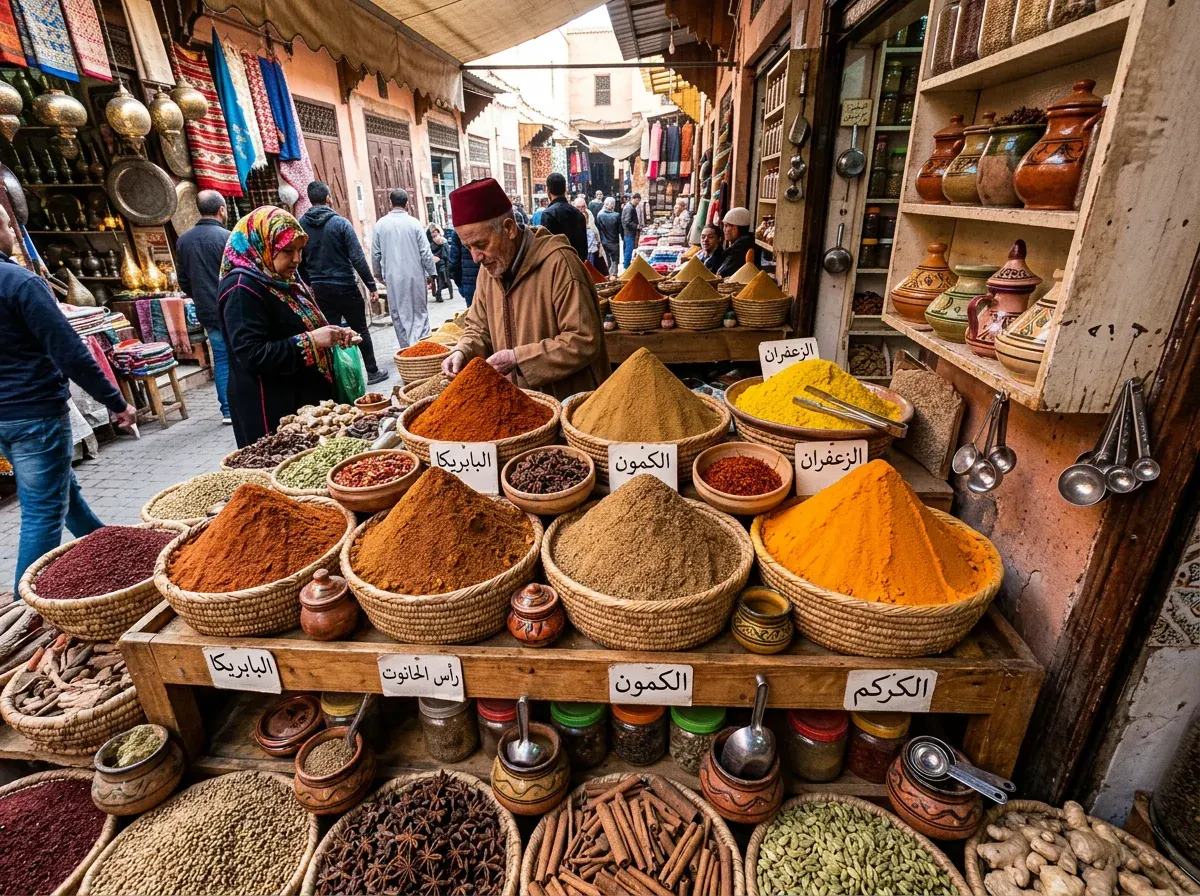
Souk El Had & small vendors
Cash only
The great market, street stalls, spice and argan sellers and tiny shops deal in cash, full stop. Bring small notes, know the numbers, and haggle in dirhams — it's where most of your cash will go.
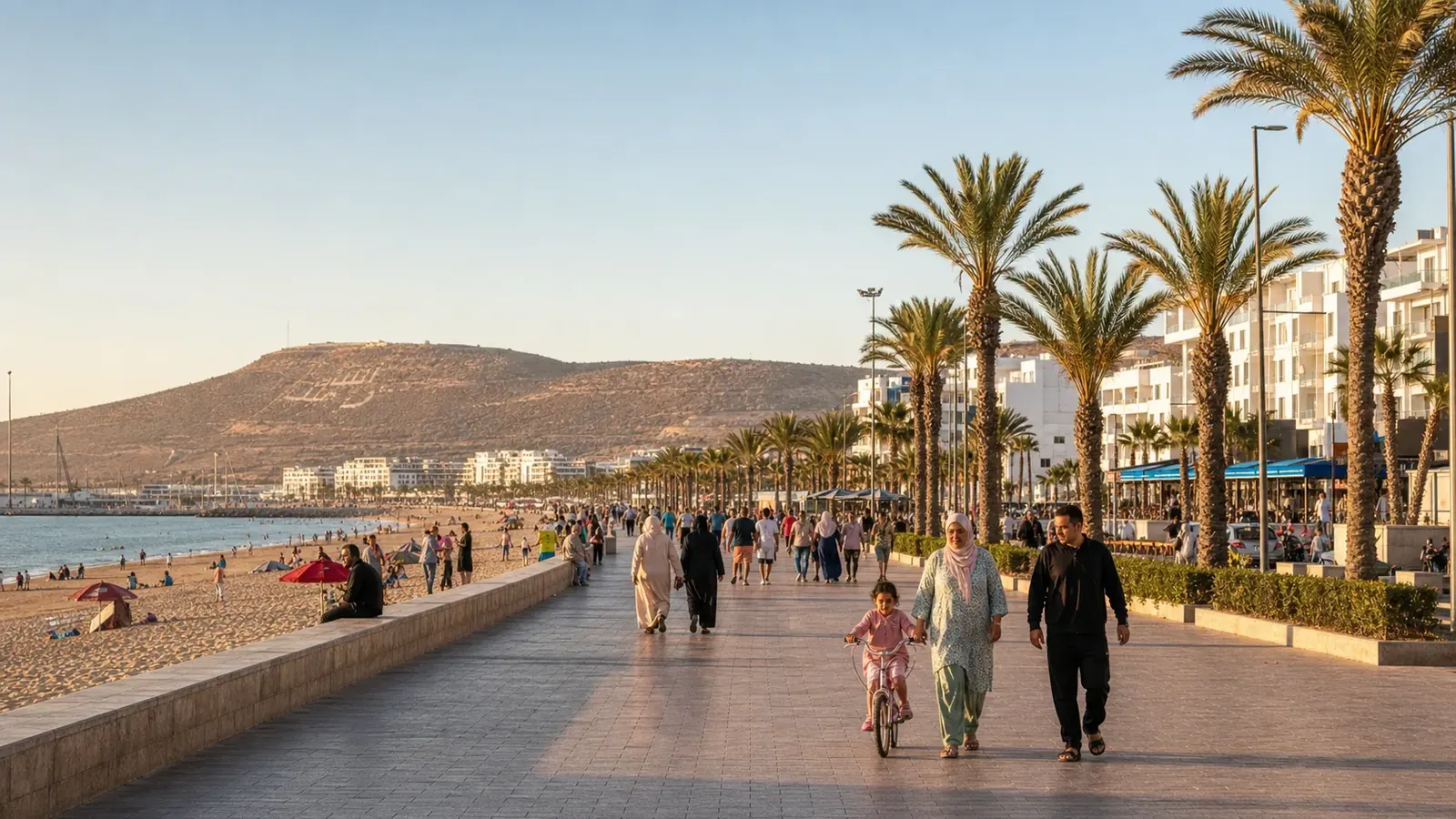
Resorts, hotels & bigger restaurants
Cards fine
Beach resorts, mid-range and smarter restaurants, the marina, supermarkets like Marjane and Carrefour and petrol stations generally take Visa and Mastercard, often contactless. Ideal for your bigger payments.
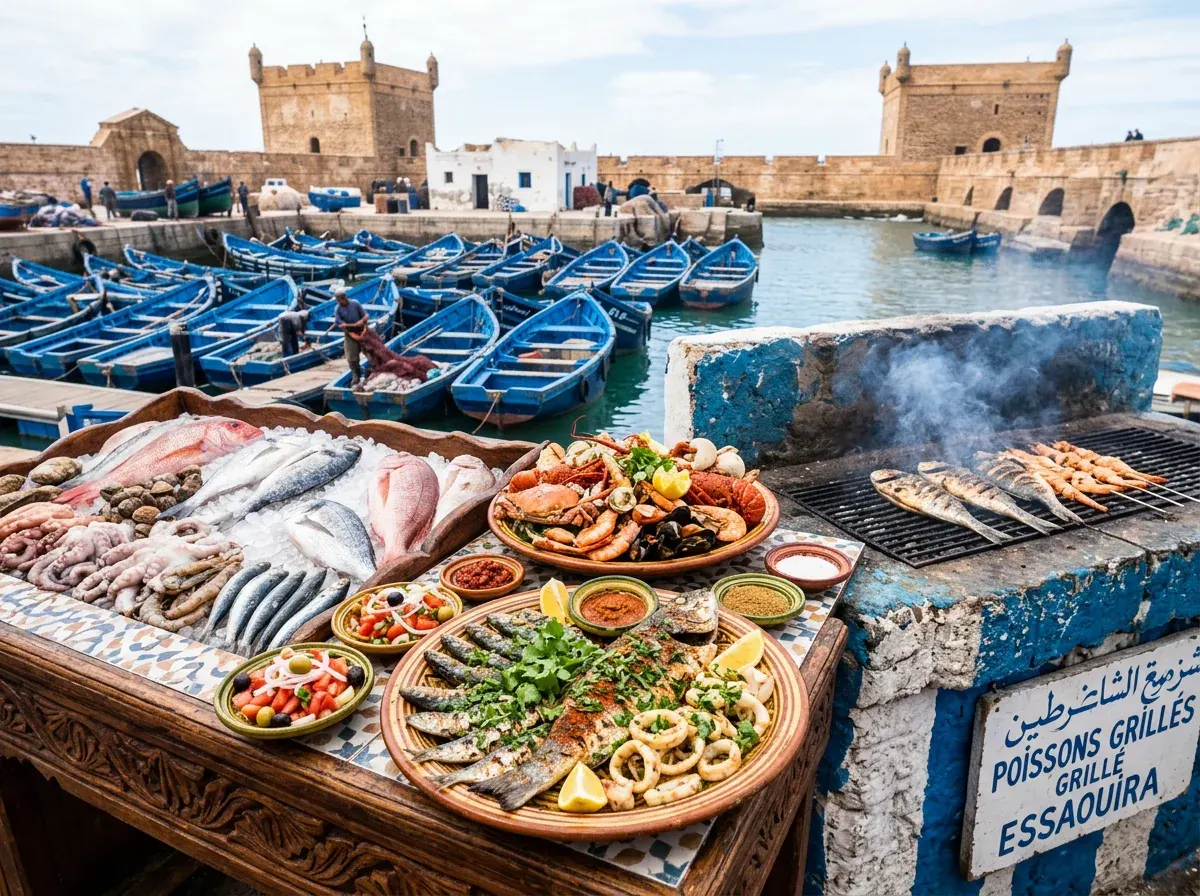
Cafés, port grills & local eateries
Mostly cash
The fishing-port fish grills, neighbourhood tagine houses and corner cafés are cash places. Marina restaurants usually take cards, but away from the strip keep dirhams handy for an honest, cheap meal.
Taxis, hammams & tips
Cash, small notes
Petits and grands taxis, local hammams, parking attendants and every kind of tip run on cash — and on small change. Keep a pocket of coins and 20s; nobody will have change for a fresh 200 note.
Getting dirhams: ATMs, bureaux & euros
The dirham is a closed currency, hard to buy before you travel, so plan to get most of your cash in Morocco. Here are the four things worth knowing.
ATMs (guichets automatiques)
Plentiful at the airport, along the Corniche and marina, near Souk El Had and at bank branches. Foreign-card fees of roughly 20–50 dirhams per withdrawal are common (often ~35), so take out a larger amount at once to cut repeat charges. Use bank or hotel machines and shield your PIN.
Exchange bureaux
Bureaux de change at Al Massira airport, the marina and downtown change euros, pounds and dollars at regulated rates that barely differ between counters. Bring your passport, keep the receipt, and you'll get fair, transparent value with no haggling.
Bring a little hard currency
Since the dirham is hard to buy abroad, carry a modest cushion of euros, pounds or dollars for arrival, then switch to dirhams. Don't try to run your whole trip on euros — you'll lose money on poor in-shop rates.
Reconvert before you fly home
Dirhams are awkward to use or change once you leave Morocco, so spend down your cash or convert the remainder at the airport before departure. Keeping your ATM or exchange receipts makes converting leftover dirhams back straightforward.
Cash or card: a quick reference
| Where | Cash or card? | Notes |
|---|---|---|
| Resort hotels | Card | Visa/Mastercard standard |
| Souk El Had & stalls | Cash | Small notes, haggle in dirhams |
| Petits taxis | Cash | Coins & small notes; use the meter |
| Marina & smart restaurants | Card or cash | Cards usually fine |
| Local cafés & port grills | Cash | Cheap and cash-only |
| Supermarkets & fuel | Card | Marjane, Carrefour, stations |
| Tips & hammams | Cash | Always have small change |
Card acceptance, ATM fees and limits vary by business and bank and change over time — treat this as a guide and confirm current details locally.
Honest practical tips
- Tell your bank you're travelling so a Morocco transaction doesn't get blocked, and check its foreign-use fees — a fee-free travel card pays for itself over a week.
- Always choose to be charged in dirhams, not your home currency, when an ATM or card terminal offers — the "convenience" conversion rate is worse.
- Break big notes when you can. The 200-dirham note an ATM spits out is awkward for a 10-dirham taxi or a market stall, so grab small change at the supermarket or café.
- Keep the bulk of your cash in the hotel safe and carry only the day's spend, especially in the busy souk.
- Use ATMs at banks, hotels or the airport rather than isolated machines after dark, and shield your PIN.
- Don't over-withdraw at the end — dirhams are hard to use or change once you leave, so spend down or reconvert before you fly.
The quick verdict
- Cash in dirhams is essential for the souk, taxis, cafés, tips and small shops.
- Cards (Visa/Mastercard) work at resorts, the marina, supermarkets, fuel and bigger restaurants.
- Don't rely on euros — accepted occasionally, but at poor rates; pay in dirhams.
- Get cash from ATMs or regulated bureaux on arrival; the dirham is hard to buy abroad.
- Expect ATM fees of roughly 20–50 dirhams per withdrawal for foreign cards — take out more at once.
- Carry small notes and coins, and reconvert leftover dirhams before you fly home.
Frequently asked
Do you need cash in Agadir, or can you pay by card?
You need both, but cash matters more. Resort hotels, larger restaurants, the marina, supermarkets and petrol stations generally take Visa and Mastercard, and contactless is increasingly common in tourist areas. But cash is king for the things that make a trip — Souk El Had and small vendors, neighbourhood tagine houses and cafés, petits taxis, hammams and tips are overwhelmingly cash-only. Carry dirhams for the everyday and keep a card for bigger or hotel payments. American Express is rarely accepted, so don't rely on it.
Can you use euros in Agadir?
Sometimes, but you shouldn't plan to. Some hotels, tour operators and tourist shops will take euros, but almost always at a rate that quietly favours them, and you'll usually get change in dirhams anyway. The local currency is the Moroccan dirham (MAD), and everyday life — taxis, the souk, cafés, tips — runs on it. Treat any euros you bring as a backup, change a sensible amount into dirhams on arrival, and pay in local currency for the fairest prices.
Where can you get Moroccan dirhams in Agadir?
The dirham is a 'closed' currency that's hard to buy abroad, so most visitors get their cash after arriving. Cash machines (guichets automatiques) are plentiful in Agadir — at Al Massira airport, along the Corniche and the marina, near Souk El Had and at bank branches across town. Exchange bureaux at the airport, the marina and downtown change major currencies at regulated rates that don't vary much. Withdrawing or exchanging on arrival is simple; just carry your card and passport for exchange counters.
How much are ATM fees in Agadir?
Expect a charge. Many Moroccan bank machines add a fee of roughly 20–50 dirhams per withdrawal for foreign cards (commonly around 35), and that's on top of any fee or exchange margin your own bank applies at home. Single-withdrawal limits are often in the region of 2,000–4,000 dirhams, so taking out a larger amount in one go reduces the per-transaction sting. These figures are indicative and change, so check your own bank's foreign-use terms — a fee-free travel card can save a surprising amount over a week.
Should you exchange money before you travel or in Morocco?
In Morocco, in nearly all cases. Because the dirham is restricted outside the country, buying it at home is usually poor value if it's available at all. Bring a modest amount of euros, pounds or dollars as a cushion, then use an ATM or a regulated exchange bureau once you land — rates inside Morocco are competitive and standardised. Withdraw or change enough to avoid repeat ATM fees, but not so much that you're left with a wad of dirhams to convert back at the end.
Is it safe to carry cash in Agadir?
Agadir is a relaxed, well-policed resort city and carrying everyday cash is fine with normal precautions. Keep the bulk in your hotel safe and only carry what you need for the day, split between a couple of pockets or a money belt in the busy souk. Use ATMs attached to banks or inside hotels and the airport rather than isolated machines at night, and shield your PIN. Petty pickpocketing exists in any crowded market, but violent crime against tourists is rare.
How much cash should you budget per day in Agadir?
It depends entirely on your style, and our separate budget guide breaks down real daily costs. As a rough cash float: a frugal day of street food, local cafés, taxis and the souk might run a few hundred dirhams, while a comfortable day still leaves big-ticket items like hotels, tours and smarter restaurants to your card. Keep small notes and coins for taxis, tips and market stalls — breaking a 200-dirham note for a 10-dirham fare is a common small frustration.
Trip sorted, money included
We'll handle the logistics so money is the easy part.
English-speaking driver-guides, fixed transparent prices for tours and transfers, and honest advice on what to pay in cash versus card — tell us your dates and what you'd like to do, and we'll build the plan.
Around a 7-minute read · Written in-house · We don't quote exact fees, rates or prices that go stale — check current terms with your bank and locally.
Agadir, Souss-Massa, Morocco