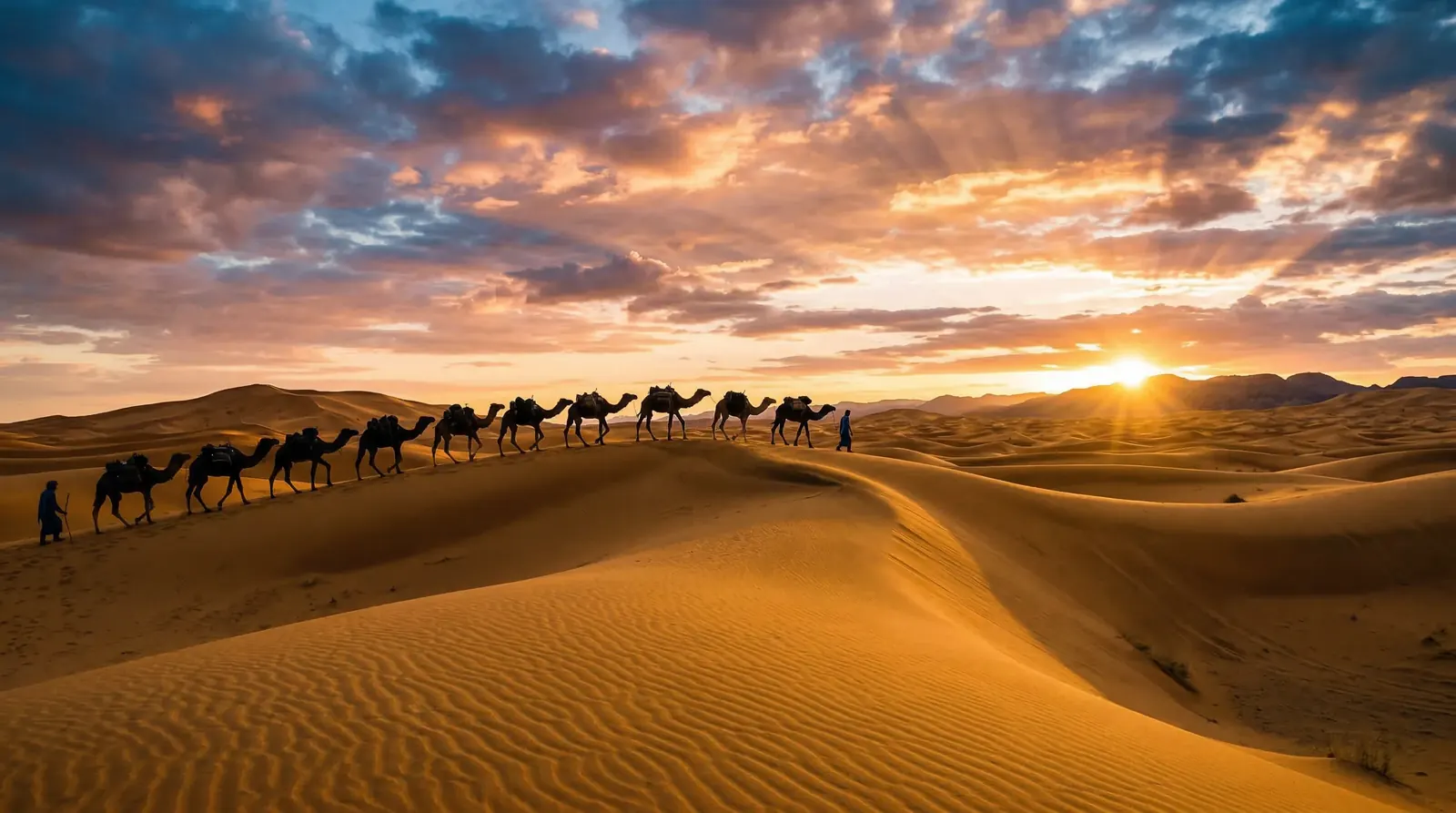
The Agadir region is a photographer's country in a way few beach destinations match. It packs a density of compelling subjects — the Atlantic and its surf, a hilltop kasbah view, a palm-filled gorge, estuary wildlife, argan craft and the ochre mountains of the Anti-Atlas — into a geography small enough to cover from a single base. What it rewards is timing, knowledge and a degree of cultural sensitivity. This is our guide, written from years of taking guests and photographers to the locations that matter.
Agadir Oufella and the bay at golden hour
The defining city shot is the whole crescent bay from the Oufella kasbah, the ruined hilltop fort. Time it for the late afternoon into dusk, when the light softens, the port and marina lights ignite, and the giant illuminated hillside script comes on across the slope. Take the cable car up and work the ridge for different angles. A 24–70mm covers the panorama; a telephoto picks out the boats and the breakwater far below.
Down at sea level, the long sweep of Agadir beach and the marina reward a wide-angle at sunrise, when the sand is empty and the light is clean before the afternoon wind.
The surf coast — Taghazout and Imsouane
The coast north of Agadir is the region's most dynamic photographic subject. The point breaks of Taghazout and the long, peeling wave of Imsouaneturn gold in the late-afternoon light, with surfers etched against the spray. The logic is simple: shoot the line-ups at the end of the day from the headlands, then catch the silhouettes as the sun drops into the Atlantic.
A 70–200mm (or longer) isolates a single rider on a wave; a wide-angle captures the sweep of the bay and the village rooftops. A polariser cuts the sea glare, and a dry bag protects gear from the spray and sand. The fishing harbours and beach cafés give warm, human counterpoints to the action.
Paradise Valley and the Anti-Atlas
Inland, Paradise Valley is a gift for the landscape photographer — palm fronds filtering light onto clear green rock pools, smooth pink boulders and reflections in the still water, best in the soft morning light before the day-trippers arrive. Deeper into the Anti-Atlas, the rose-coloured granite around Tafraoute, the Painted Rocks and the almond blossom (February) are extraordinary in the raking light of late afternoon.
A 24mm wide-angle captures the scale of the gorges and valleys; a telephoto picks out the granite ridgelines and the play of light on the strata. The walled town of Taroudant, its ochre ramparts glowing at sunset, is another fine subject — see our dedicated Taroudant guide.
Souss-Massa — birds and wild coast
South of the city, Souss-Massa National Park is the region's wildlife subject. Where the river meets the sea, you can photograph flamingos, the rare northern bald ibis, herons and waders, with the wild, empty Atlantic beach beyond. A long telephoto (300mm+) and patience at dawn or dusk are the keys; the soft early light over the estuary is the prize.
The argan groves on the way, with goats sometimes perched in the branches, are a classic — if often staged — Souss image; approach with a telephoto and a healthy scepticism about handlers expecting a tip.
Souk El Had and the fishing port
For colour, craft and human life, Souk El Had is the place — spice pyramids, argan and amlou, leather and ceramics behind its numbered gates, in soft filtered light. The fishing port at the morning landing is even better: boats, nets, ice and the catch, and fishermen who, once greeted, are often happy to be photographed. Permission and a smile go a long way; avoid flash and be discreet.
Photographing people: how to do it well and respectfully
Some of the region's most compelling images involve people — argan-cooperative women, fishermen, surfers, market traders, Berber villagers. The rules are straightforward but worth stating explicitly:
- Always ask before photographing someone at close range. A gesture and eye contact communicates the question. Respect a refusal without negotiation or payment pressure.
- Engaging with a craftsperson's work — asking about the process, buying something — almost always produces a natural willingness to be photographed.
- Street photography at medium distance (70–135mm) is standard and generally accepted. Pointing a wide-angle into someone's face is not.
- Show people their image on the camera screen. The reaction is almost always positive and often opens a longer conversation.
- Some posed shots — a camel handler on the beach, a goat-in-an-argan-tree tableau — may come with the expectation of a small tip. This is understood and fair; agree it first.
Our private guides can arrange cooperative and workshop visits with people who have agreed to photography in advance — the difference in image quality from a relaxed, consenting subject is enormous. See our private guide services and photography-focused tours.
Frequently asked
What is the most photogenic place around Agadir?
The bay from the Oufella kasbah and the surf coast top most lists. The crescent of Agadir beach with the port and the illuminated hillside script glows at dusk from the kasbah, while the point breaks and golden light of Taghazout and Imsouane are superb at sunset. Inland, the palm pools of Paradise Valley and the flamingos of Souss-Massa are the standout natural subjects.
What is the best time of year to photograph the Agadir region?
Spring and autumn give the most consistent quality light — warm, clear and free of summer haze — and the best surf for action shots. February brings almond blossom to the Anti-Atlas. Winter offers soft, low light and quiet beaches. Summer light is harsh between 10am and 4pm, so shoot the golden hours and rest at midday; the coast keeps a useful afternoon haze off the sea.
Is it acceptable to photograph people around Agadir?
Always ask first for close-up portraits. Many Moroccans, particularly in rural Souss and Berber communities and older generations, prefer not to be photographed without consent. A gesture and a questioning look usually communicates the request; respect a refusal without negotiation. Photographing argan-cooperative women, fishermen or craftspeople you have engaged with is generally welcomed once you've connected.
What camera gear should I bring to Agadir?
A versatile 24–70mm covers most situations. A wide-angle (16–24mm) is excellent for the beach, the gorge of Paradise Valley and the Anti-Atlas landscapes. A telephoto (70–200mm or longer) is essential for surf action and the birdlife of Souss-Massa, and lets you keep a respectful distance for candid shots. A polariser tames the bright Atlantic glare; bring a dry bag near the water.
Can you photograph at the kasbah and the souk?
Yes — exterior and landscape photography at Agadir Oufella, the marina and the beach is straightforward, and sunset from the kasbah is the city's signature shot. Inside Souk El Had, photographing produce and stalls is generally fine, but ask before close portraits of vendors. Avoid flash and be discreet in the food and prayer areas.
Where are the best places to photograph people at work near Agadir?
The fishing port at the morning landing gives wonderful images of boats, nets and the catch. The women's argan cooperatives on the roads inland make superb close-ups of hands cracking nuts and pressing oil — ask first. Souk El Had's spice and craft gates offer market traders, and Taghazout gives surfers and beach life. A guide can arrange a cooperative visit with subjects who have agreed in advance.
Photography itineraries
We build trips around the light, not the tourist schedule.
Sunset from Oufella, surfers at Taghazout, dawn at Souss-Massa, the quiet pools of Paradise Valley, argan-cooperative access — tell us your priorities and we design around them.
Request an itinerary