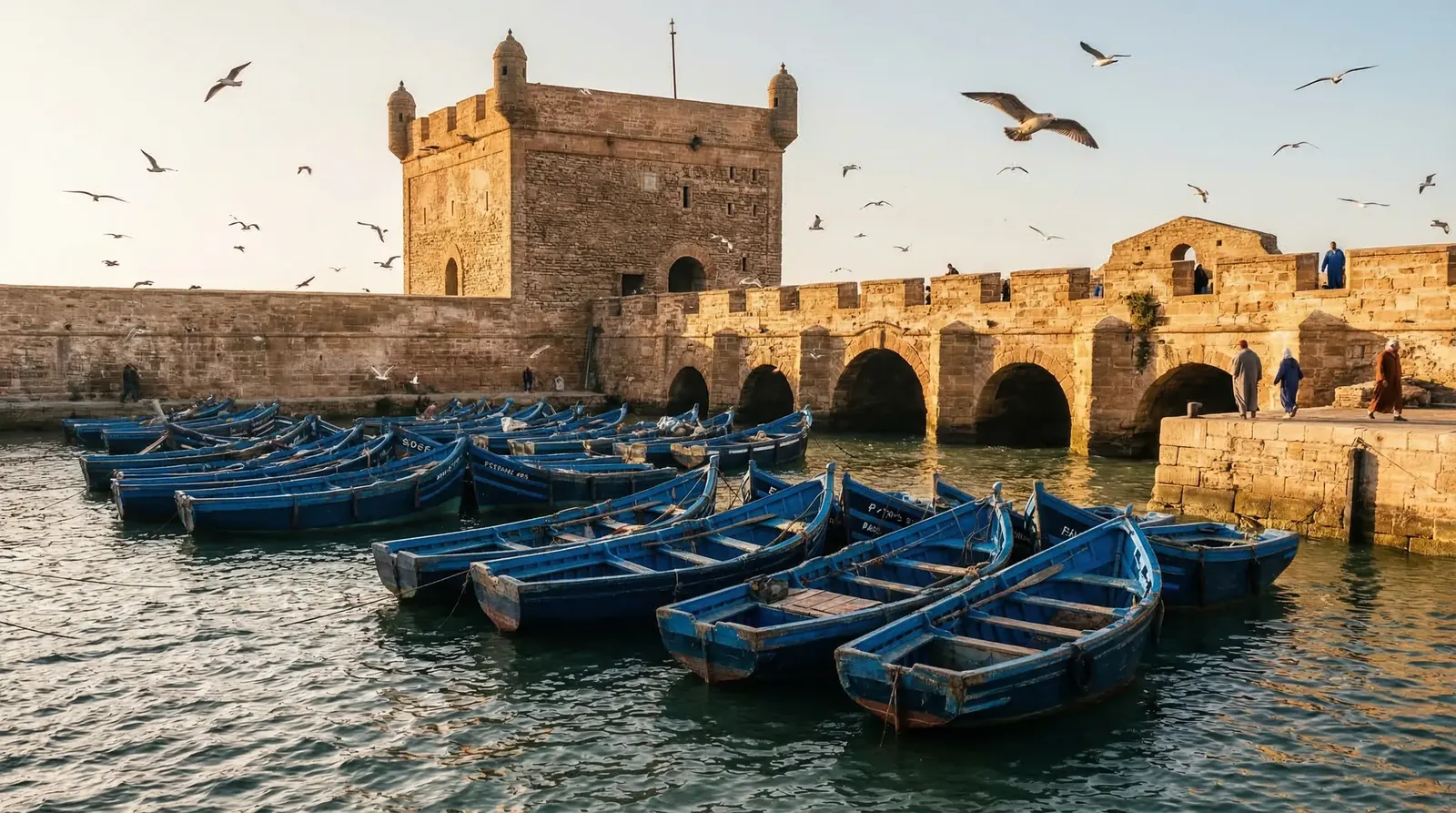
The honest answer to "when should I visit Agadir?" is: almost whenever you like. Sitting on Morocco's sheltered south Atlantic coast, the city enjoys a mild semi-arid climate — roughly 300 sunny days a year, very little rain, and a sea breeze that softens the heat of summer. That is a rare combination. It means Agadir does not really have a high season and a dead season so much as different moods: a winter-sun bolthole, a warm spring and autumn beach city, and a gentle summer escape. The figures below are typical, approximate norms rather than guarantees — weather varies year to year — but they hold true often enough to plan around.
The short version
If you want the warmest, calmest beach days, aim for April to June or September to October. If you are escaping a cold northern winter, the October to April stretch is Agadir's great gift: mild, sunny and quiet. Surfers should think autumn through spring for the famous points up the coast. There is no month you should avoid — you simply choose the trip you want.
Winter — November to March: prime winter sun
This is the season Agadir is quietly famous for. While much of Europe is grey, Agadir's winter days are typically mild and sunny, often around 14–21 °C by day, with long clear spells and very little rain. Evenings turn cooler — a light jacket or jumper earns its place — but the daytime is made for the corniche, café terraces, the marina and easy day trips into the warm interior.
December and January are the coolest and the quietest, which is part of the appeal: the long beach is yours, prices are gentler and the light is beautiful. The sea is cool for swimming in midwinter, so many visitors save the actual sea-bathing for warmer months and treat winter as a sunbathing, walking and exploring break. February into March begins to warm and feels like an early spring. For a reliable winter-sun escape within a few hours' flight of northern Europe, Agadir is among the strongest options anywhere.
Spring — April to June: the sweet spot
For many travellers, spring is Agadir at its best. The days are warm and settled, the sea has begun to lose its winter chill, the light is soft and the wildflowers are out in the Souss valley and the Anti-Atlas beyond. It is warm enough for full beach days yet rarely uncomfortable, and the city has an easy, unhurried rhythm. This is the time we most often recommend for a first visit — comfortable for swimming, walking, the Oufella viewpoint and day trips alike. Pack for warm days and cooler evenings and you will want for nothing.
Summer — June to September: warm, breezy and tempered by the Atlantic
Here is where Agadir quietly outshines its inland cousins. While Marrakech bakes, Agadir stays comfortable: daytime highs typically sit around 20–28 °C, kept in check by a cool sea breeze off the Atlantic. Mornings are calm and golden; the wind tends to freshen after lunch, which is part of why the beach empties a little in the afternoon and the surf coast comes alive. It is a warm, pleasant summer rather than a scorching one — which is exactly why Moroccan families pour into Agadir in July and August. Expect the city at its liveliest, the promenade busy in the evenings and a holiday buzz along the bay.
The sea is at its mildest of the year in late summer, though the Atlantic upwelling keeps it bracing even then. If you want the city at full tilt and don't mind sharing the sand, summer delivers; if you prefer quiet, look to the shoulder months either side.
Autumn — September to November: warm sea, calmer crowds
Autumn may be the most underrated season of all. September and October often bring the warmest sea of the year, settled warm air and the summer crowds beginning to thin — arguably the finest beach days Agadir offers. The afternoon breeze eases as the weeks pass, the light turns golden, and it remains warm enough for long days on the sand well into November, by which point the gentle slide into winter sun has begun. For warm, calm, uncrowded beach days, this window is hard to beat.
The sea, and a word on swimming
One thing surprises first-time visitors: the water is cool. Agadir faces the open Atlantic, and a year-round upwelling of colder water keeps the sea bracing even in high summer. It is swimmable for most of the year, but it is refreshing rather than warm — closer to a wake-up than a warm bath. The mildest sea is usually late summer into early autumn. Plenty of people swim happily all year; others reach for a wetsuit, which is no coincidence given the surf culture next door.
Surf season up the coast
If waves are your reason for coming, the timing shifts. The surf coast around Taghazout and Imsouane, just north of the city, runs largely on the autumn-to-spring window, when North Atlantic swells reach the points most consistently — broadly October to March for the reliable, famous right-handers. Summer is gentler and friendlier for beginners. Swells move week to week, so always check a current forecast. We cover the two main breaks in detail in our Taghazout vs Imsouane guide.
Ramadan and the local calendar
One practical note that has nothing to do with the weather: Ramadan. Its dates move each year on the Islamic calendar, so it can fall in different seasons. During the holy month, some cafés and restaurants adjust their hours, the daytime rhythm of the city is quieter, and life picks up after sunset, when the evenings become especially atmospheric. Tourist hotels and beaches run normally throughout. If your trip might coincide with Ramadan, it is worth checking the dates for your travel year and planning daytime meals accordingly — we are always happy to advise.
So when should you go?
Choose by the trip you want. October to April for winter sun, quiet beaches and gentle prices. April to June and September to October for the warmest, calmest beach days and the mildest sea. Autumn through spring for surf. July and August for the city at its liveliest, tempered by the Atlantic breeze. Whatever you pick, you will almost certainly get sun — and we will build the rest around it. See how Agadir fits a longer trip on our 7-day southwest Morocco itinerary.
For measured averages for every month (temperatures, rainfall, rainy days and sunshine), see Agadir weather by month. For clothing by season, see what to wear in Agadir.
Frequently asked
What is the best time of year to visit Agadir?
Agadir is genuinely a year-round destination, which is its great advantage. If you want the warmest, calmest beach days, aim for April–June or September–October, when the sea is at its mildest and the air is warm without the high-summer breeze. For winter sun, October through April is hard to beat anywhere in Europe's reach — mild, sunny days and far fewer crowds. There is no truly bad month; you simply choose the kind of trip you want.
Is Agadir warm enough in winter?
Yes — that is precisely why it is Morocco's prime winter-sun beach city. From November to March, daytime temperatures typically sit around 14–21 °C with long sunny spells and very little rain, while evenings turn cooler and call for a light layer. You can comfortably sunbathe, walk the corniche and take day trips; the sea is cool for swimming but the beach itself is at its most pleasant and uncrowded.
Is Agadir too hot in summer?
Rarely. Unlike inland Marrakech, Agadir sits on the Atlantic, and a cool sea breeze tempers the summer heat. Daytime highs usually stay around 20–28 °C — warm and pleasant rather than scorching. It is one of the more comfortable Moroccan destinations in July and August, which is part of why Moroccan families flock here in summer.
How warm is the sea in Agadir?
Cooler than you might expect. Agadir faces the open Atlantic, and a year-round upwelling of cold water keeps the sea bracing even in summer. It is swimmable for most of the year but always refreshing rather than bath-warm; the mildest sea is usually found in late summer and early autumn. Many visitors swim happily; others prefer a wetsuit, which is also why the surf coast nearby runs on neoprene.
When is the best time to surf near Agadir?
The surf season around Taghazout and Imsouane runs broadly from autumn through spring, when North Atlantic swells reach the coast most consistently. October to March tends to deliver the most reliable waves for the famous right-hand points, while summer is gentler and better suited to beginners. Always check a current forecast, as conditions vary week to week.
Does Ramadan affect a visit to Agadir?
It can. During Ramadan, the dates of which shift each year on the Islamic calendar, some cafés and restaurants adjust their hours and the daytime rhythm of the city is quieter, with life picking up after sunset. Tourist hotels and beaches operate normally, and many travellers find the evenings especially atmospheric. If your trip may fall during Ramadan, check the dates for your travel year and plan meals accordingly.
Any season suits
Tell us when you can travel — we'll make the most of the weather.
Whether it's a winter-sun escape, a warm spring beach week or an autumn surf trip, we build Agadir around your dates: a flight-tracked airport pickup, a handpicked sea-facing hotel and day trips matched to the season.
Plan your Agadir stay