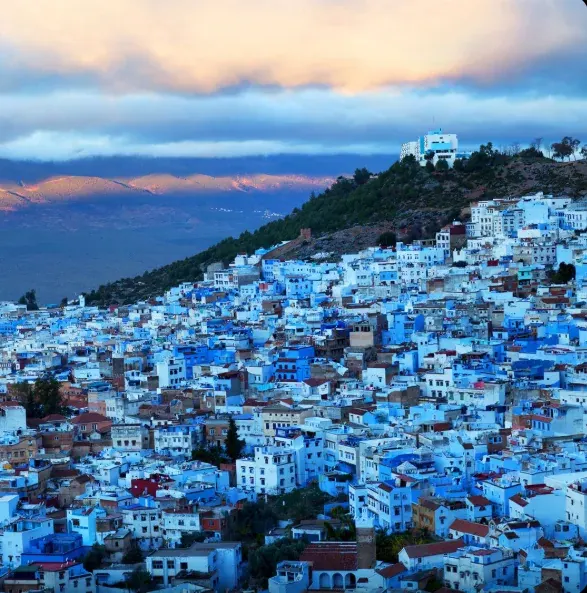
Agadir and the south are a photographer's playground: the long Atlantic beach, surf breaking at Taghazout, the fishing port at work, the colour and bustle of Souk El Had, the palm gorge of Paradise Valley, and argan trees against the Anti-Atlas. Knowing where to go, when, and how to engage respectfully makes all the difference.
In this guide
Best locations and light
Agadir's beach and corniche reward both ends of the day — the curve of the bay catches warm light at sunrise, and the hillside Kasbah ruins above the city give the classic sunset panorama over the marina and the lit-up 'Allah, Nation, King' slogan on the slope. The fishing port is a working, characterful scene best shot in the busy morning hours, and Souk El Had's spice piles, argan stalls and produce are a riot of colour under the covered light.
Inland, the landscape does the work. Paradise Valley's palm gorge and turquoise pools photograph best in the soft light of late morning when the sun reaches the canyon floor. Up the coast, surf at Taghazout and Anchor Point gives dramatic golden-hour silhouettes, and the lone argan trees of the Souss — sometimes with goats climbing in them — make an unmistakable south-Morocco image against the Anti-Atlas foothills.
Etiquette and photographing people
The single most important rule: ask permission before photographing people, every time. A fisherman mending nets at the port, a woman cracking argan nuts at a co-op, children on the beach — each deserves the choice. The Arabic to use is 'mumkin sura?' (may I take a photo?). Many will say yes with pleasure; some will ask for a small fee — 5–20 MAD is fair and generous; some will decline, and that must be respected without argument.
Candid long-lens street photography of people who would decline if asked sits uneasily in Morocco and can cause real friction, especially around the more conservative inland villages. The most rewarding portraits come from connection, not distance: take the time to talk, accept a glass of tea at the co-op if it's offered, and the resulting images reflect that warmth.
Gear and practical notes
Around Agadir a versatile zoom (24–70mm equivalent) covers the souk, the port and the beach, while a longer lens helps for surf action at Anchor Point and the bird life of Souss-Massa. Salt spray and fine beach sand are the real hazards here rather than desert dust — keep a sealed bag and lens cloths, and rinse nothing on the beach. The coastal glare is strong, so shade your lens against flare and protect the camera from direct sun.
- Bring a polariser to cut the Atlantic glare and deepen the sea and sky.
- A small tripod pays off for the sunset panorama from the Kasbah hill and long-exposure surf shots.
- Modern phone cameras handle Agadir's bright light beautifully — don't feel obliged to carry heavy gear to the beach.
- Keep your camera discreet and ask first around Souk El Had and the port, where some traders expect a small fee for portraits.
Drone rules in Morocco
Drone operation in Morocco requires authorisation from the Moroccan Civil Aviation Authority (DGAC). Flying without a permit is illegal, and drones have been confiscated at customs and in the field. The process for obtaining authorisation is bureaucratic and time-consuming. For most travellers, the advice is to leave the drone at home — Morocco's landscape is extraordinary enough at ground level, and the legal risk is not worth it.
Frequently asked
Can you take photographs at Souk El Had?
Of the produce, spice piles, argan stalls and general scenes — yes. Of people — always ask first. The argan co-ops in the Souss usually welcome photographs of the work when you visit, but check with the women themselves; a small tip is appreciated.
When is the best time of day to photograph Agadir?
Golden hour transforms the bay — sunrise along the beach, and sunset from the Kasbah hill over the marina. Paradise Valley is best in late morning when sunlight reaches the canyon floor. Midday on the open beach is harsh and flat.
Is it safe to use a camera around Agadir?
Yes, in general — the corniche and marina are relaxed and easy. Keep your camera close and aware in the busiest stretches of Souk El Had and the port, and a strap worn across the body rather than over one shoulder is sensible.
Are drones allowed in Morocco?
Not without prior authorisation from the Moroccan DGAC. Drones have been confiscated at customs. Unless you have the time and connections to navigate the permit process, leave the drone at home.
What is 'mumkin sura' and when should I use it?
'Mumkin sura?' means 'may I take a photo?' in Darija (Moroccan Arabic). Use it every time before pointing your camera at a person — it takes three seconds, shows genuine respect, and usually results in a much more natural and willing subject.
Planning a trip?
Let our team handle the details.
Tell us your dates and style and we'll send a written itinerary and a transparent quote within 24 hours.
Request an itineraryKeep reading
Culture
Morocco Etiquette & Customs
Agadir's resort culture is relaxed, but a little awareness still goes a long way. Beachwear belongs on the seafront; cover up for Souk El Had and inland villages, greet warmly, ask before photographing people, use your right hand, and embrace the unhurried pace of mint tea.
Planning
The Best Time to Visit Morocco
Agadir is Morocco's mildest year-round base: the Atlantic keeps summers cooler than the interior and winters warm enough for the beach. Spring and autumn are flawless, winter is prime sun-seeking season, and even high summer stays bearable thanks to the sea breeze.
Itineraries
Morocco Itinerary: 10 Days
Ten days is the sweet spot for a south-Morocco trip that opens and closes by the sea in Agadir — long enough to fold the Atlantic coast and surf together with Marrakech and a taste of the Sahara, without ever feeling rushed.